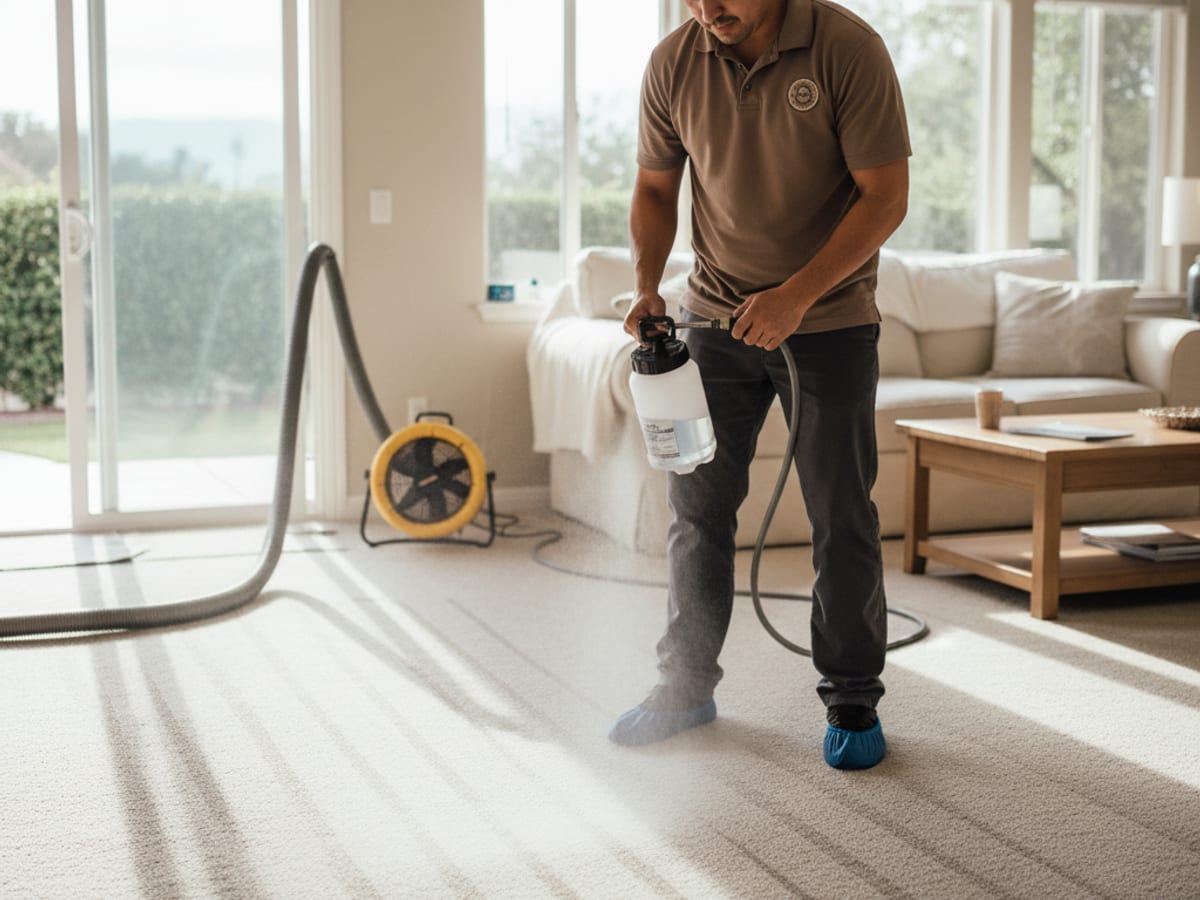
Carpet protector is a clear coating sprayed onto fibers after a deep clean. It makes spills bead up instead of soaking in, so you have time to blot before a stain sets. In San Diego it runs about $0.05 to $0.30 per square foot, or roughly $25 to $70 a room. Whether it’s worth it depends on your fibers, your foot traffic, and how close you live to the sand. Here’s the honest breakdown.
What carpet protector actually does
Protector is a fluoropolymer. Brand names like Scotchgard get used as shorthand, the way people say Kleenex for tissue. The coating wraps each fiber in a thin barrier that resists water and oil. A spill sits on top for a few seconds instead of wicking straight into the pile.
That window is the whole point. A glass of red wine on bare carpet starts setting almost immediately. The same spill on protected carpet beads up, giving you time to grab a towel before it becomes a permanent mark. Protector does not make carpet stain-proof. It makes stains preventable if you act fast.
It also helps with dry soil. Protected fibers hold less grit, so dirt vacuums out more easily and grinds in less. That matters more than most people realize, because abrasive soil is what actually wears carpet down over time.
Why San Diego changes the math
Most national pages treat protector the same everywhere. It isn’t. A few local factors shift whether it pays off here.
Coastal humidity slows the cure. Protector needs to dry to bond properly. In Pacific Beach, La Jolla, or Coronado, the marine layer keeps indoor humidity high, especially May through July. A coating that cures in two hours inland can take longer near the water. A good crew runs air movers to keep the application even and the dry time short. We cover this in detail in our carpet dry time guide.
Beach sand is abrasive. If you’re walking in from the coast, you’re tracking fine silica grit into the pile every day. That sand acts like sandpaper on unprotected fibers. Protector won’t stop sand from coming in, but it helps it vacuum back out instead of lodging deep.
Hard water leaves residue. Much of the county runs hard water. Carpet itself doesn’t touch your tap, but DIY spot cleaning with hard tap water can leave mineral film that attracts dirt. Protected fibers shrug off more of that buildup.
Pet households are everywhere. San Diego is a dog town. Protector buys you time on accidents, but it is not an odor solution. For that, see our pet urine odor removal guide.
What it costs here
Pricing depends on square footage, fiber type, and how the cleaner charges. Here’s the local range.
| How it’s priced | Typical San Diego range | Notes |
|---|---|---|
| Per square foot | $0.05 to $0.30 | Most common for whole-home jobs |
| Per room | $25 to $70 | Rooms averaged around 200 sq ft |
| Per stairway | $20 to $40 | Stairs take more product and time |
| Whole home (1,500 sq ft) | $120 to $300 | Bundled with a full clean |
Two things move the number. First, fiber type. Olefin and polyester soak up more product than tight nylon, so they cost a little more to coat. Second, whether it’s bundled. Protector is cheapest added onto a cleaning you’re already paying for, because the fibers are open and ready. Standalone application on dry carpet costs more and works less well.
We give upfront quotes before any work starts. No surprise line items after the fact.
When it’s worth paying for, and when it isn’t
Protector earns its keep in some homes and barely matters in others. A simple framework:
Worth it:
- You have kids, pets, or both
- Light-colored carpet, the tan and cream that fills most SD rentals and HOA homes
- High-traffic paths like entryways and hallways
- You just paid for a deep clean and want it to last
- Polyester or olefin carpet, which stains more easily than nylon
Skip it or go light:
- Low-traffic guest rooms nobody uses
- Carpet you plan to replace within a year
- Wool, which has natural lanolin and often needs a wool-specific product, not standard protector
Fiber type drives a lot of this. If you’re not sure what you have, our carpet fiber types guide walks through how to tell.
How long it lasts
Manufacturers often quote a year or more. Real life is shorter, and depends entirely on traffic. A quiet bedroom can hold protection for a year or two. A busy hallway near the beach might wear thin in six to nine months.
The honest rule: protector wears off where you walk most. Reapply when you redo your annual cleaning, and concentrate it on the paths and rooms that take the heaviest use. There’s no point coating a closet to the same level as your front entry.
You can spot-test whether yours is still working. Drip a few drops of water on the carpet. If it beads and sits, the coating is holding. If it soaks straight in, it’s time to reapply.
DIY protector versus professional
You can buy spray cans at the hardware store. They work, sort of, with two real limits. Coverage is uneven from a handheld can, so you get patchy protection. And consumer product is weaker than what pros apply, so it wears off faster.
The bigger issue is timing. Protector bonds best to clean, slightly open fibers right after extraction. Spraying it over carpet that’s already dry and full of soil traps the dirt under the coating. That’s why protector is almost always sold as an add-on to a clean, not a separate trip.
If you’re weighing the broader DIY question, our DIY versus professional carpet cleaning guide lays out where renting a machine makes sense and where it doesn’t.
Frequently asked questions
Is carpet protector the same as Scotchgard?
Scotchgard is a brand of carpet protector, the way Kleenex is a brand of tissue. Most pros apply a fluoropolymer product that does the same job. Ask what your cleaner uses if the brand matters to you.
Is carpet protector safe for pets and kids?
Once it’s cured and dry, a quality fluoropolymer protector is low-odor and safe for everyday family use. We use pet-safe, low-residue methods. Keep everyone off the carpet until it’s fully dry, usually a few hours, longer in coastal humidity.
How long before I can walk on it?
Plan on staying off the carpet until it’s dry, often two to four hours. Near the coast, where the marine layer keeps humidity up, give it longer. Air movers shorten the wait significantly.
Does protector work on old stains?
No. Protector is preventive, not corrective. It guards against future spills. Existing stains need spot treatment first, which is a different service.
How often should I reapply it?
Tie it to your annual deep clean. High-traffic paths and beach-adjacent homes may need it sooner, around the six to nine month mark. Do the water-drop bead test if you’re unsure.
Can I just buy a can and do it myself?
You can, but coverage is patchy and consumer product is weaker. The bigger problem is timing, since protector works best on freshly cleaned fibers. Bundling it with a professional clean costs little extra and holds up far longer.
Want a straight answer for your home
Whether protector is worth it comes down to your carpet and your household, not a national price chart. We serve all of San Diego County, give upfront quotes before we start, and run fast dry times even through the marine layer. If you want carpet protector quoted alongside a clean, see our carpet protector and Scotchgard service or call Carpet Pros SD at (858) 925-5546. We’ll tell you honestly whether it’s worth it for your floors.