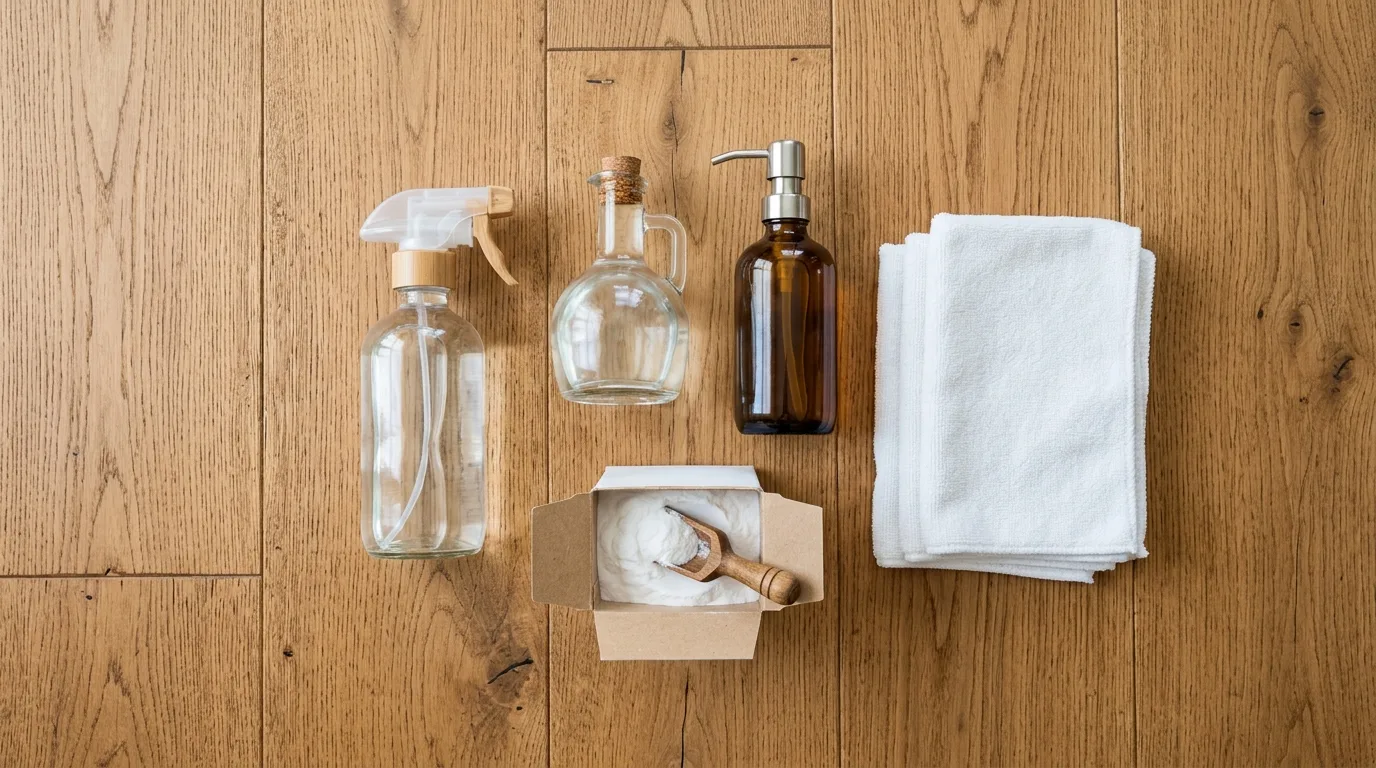
A simple, safe homemade carpet cleaner is one tablespoon of clear dish soap and one tablespoon of white vinegar mixed into two cups of warm water. Spray lightly onto the stain, blot with a clean cloth, and rinse with cold water. That combination handles most everyday spills on synthetic carpet. The rest of this guide gives you exact recipes for tougher jobs, explains which ingredients to avoid, and tells you when DIY stops being enough.
The all-purpose spot cleaner (exact recipe)
This is the recipe most carpet manufacturers consider safe for synthetic fibers, nylon, polyester, triexta, and olefin.
What you need:
- 2 cups warm water
- 1 tablespoon clear dish soap (Dawn or similar, dye-free)
- 1 tablespoon white vinegar (distilled, 5% acidity)
How to use it:
- Blot up as much of the spill as possible first. Don’t rub, blotting lifts; rubbing spreads.
- Mix the solution in a spray bottle.
- Spray lightly. You want the fiber damp, not soaked.
- Blot from the outside of the stain inward with a clean white cloth.
- Rinse the spot with cold water using a separate damp cloth.
- Press a dry towel over the area and weight it down for 15 minutes to draw up remaining moisture.
If you’re in East County San Diego, El Cajon, Santee, Lakeside, your tap water is harder than coastal areas. Hard water leaves mineral residue that can attract soil after cleaning. Use distilled water in your spray bottle for better results and less re-soiling.
The good news for San Diego DIYers: our dry climate means carpet dries fast. A spot treated in the morning is usually dry by mid-afternoon, which matters because wet carpet that stays wet too long breeds odor and mildew.
Using a homemade cleaner in a carpet machine
Rental carpet machines and consumer machines like Bissell or Hoover have specific tank requirements. Most accept a water-plus-soap solution, but there are real rules here.
Safe machine solution:
- 1 gallon warm water
- 1 teaspoon clear dish soap (less foam than the spot recipe, machines amplify sudsing)
- 1 tablespoon white vinegar (optional, helps cut soil)
Use distilled water if you have a machine with a heating element, minerals from hard tap water build up in the tank over time.
The baking soda warning: Never pour baking soda directly into a machine’s water reservoir. Dry powder clogs filters, fouls the pump, and voids most warranties. If you want to use baking soda, sprinkle it dry on the carpet, let it sit for 30 minutes to absorb odor, then vacuum thoroughly before running the machine. Those are two separate steps, not one combined process.
Recipes by problem type
Different stains call for different approaches.
General soil and everyday dirt: Use the all-purpose recipe above. For high-traffic areas that are just dingy, not stained, the machine solution works well for a full-room refresh.
Grease and oil (cooking oil, butter, makeup): Skip the vinegar. Use one tablespoon of dish soap in two cups of warm water only. Dish soap is a degreaser; vinegar is not. Blot, don’t rub. Repeat if needed.
Pet odor: Here’s where DIY hits a wall. Vinegar and baking soda mask odor temporarily. They don’t break down urine proteins at the molecular level. For that you need an enzyme cleaner, a store-bought product like Nature’s Miracle or Rocco and Roxie that contains live bacteria cultures that digest the waste compounds. You can’t make an enzyme cleaner at home. The biology isn’t replicable in a pantry.
For pet stains, buy an enzyme cleaner and follow the label instructions. Apply generously, cover with plastic wrap for 24 hours to slow evaporation, then blot and rinse. If the odor has soaked through to the pad and subfloor, no surface treatment, DIY or professional, will fully eliminate it without a deeper extraction process.
Ingredients that damage carpet
Knowing what not to use matters as much as knowing the right recipe.
Vinegar on wool, silk, or natural fiber carpet: White vinegar is acidic. On natural protein fibers, wool, sisal, jute, it can break down the fiber structure over time and cause permanent texture damage. If you have wool carpet, skip vinegar entirely. Use cool water and a tiny amount of dish soap only.
Hydrogen peroxide: A 3% hydrogen peroxide solution removes some stains, but it can bleach carpet dye, especially on darker colors and non-colorfast fibers. If you test it, test in a hidden corner first and wait 10 minutes before applying anywhere visible. Even then, use it sparingly.
Bleach: Never. Bleach destroys carpet fiber and permanently strips color. There’s no scenario where household bleach belongs on carpet.
Too much water: Over-wetting is one of the most common DIY mistakes. Saturating carpet pushes soil and stain compounds deeper into the backing and pad. It also takes much longer to dry, which creates conditions for mold and mildew, a real concern even in San Diego’s dry climate if a window is closed or airflow is poor.
Homemade vs. store-bought vs. professional
| Approach | Cost | What it handles |
|---|---|---|
| Homemade (dish soap + vinegar) | Under $1 per use | Fresh surface spills, light soil on synthetic carpet |
| Store-bought carpet cleaner | $8–20 per bottle | Broader stain types, enzyme options for pet odors |
| Rental carpet machine | $35–60 per day | Room-level refresh, moderate embedded soil |
| Professional hot-water extraction | $150–300 per visit | Deep-set soil, odor in the pad, allergen reduction, post-move cleaning |
DIY handles the first category well. The further a problem moves down that list, older stains, deep soil, odor that’s soaked into the backing, the more extraction power and heat you need, and home solutions don’t get there.
If you’ve tried the spot recipe twice on the same stain and it’s not lifting, that’s the stain telling you it needs more than surface treatment. Continuing to apply more liquid at that point risks over-wetting the area without improving the result.
For more on this comparison, see our guide on DIY vs. professional carpet cleaning and our breakdown of steam cleaning vs. other methods in San Diego.
Coastal humidity near the beach (Ocean Beach, La Jolla, Encinitas) means carpet takes longer to dry than inland areas. If you’re cleaning carpet in a home near the coast, run a fan or open windows to move air across the area. Inland from the 15 freeway, drying is rarely an issue.
Frequently asked questions
What is the best homemade carpet cleaning solution?
The most reliable all-purpose homemade carpet cleaner is one tablespoon of clear dish soap and one tablespoon of white vinegar in two cups of warm water. It works on most fresh spills on synthetic carpet, nylon, polyester, and olefin. For grease stains, drop the vinegar and use dish soap alone. For pet odors, skip homemade entirely and use a store-bought enzyme cleaner.
Can I put homemade cleaner in my carpet machine?
Yes, with the right ratio. Use one teaspoon of dish soap per gallon of water, with an optional tablespoon of white vinegar. Keep the soap amount low, machines amplify sudsing, and too much foam reduces suction and leaves residue. Never put baking soda powder directly in a machine reservoir. Apply it dry, let it sit, vacuum it up, then run the machine separately.
Is vinegar safe on all carpet?
No. Vinegar is safe on synthetic carpets, nylon, polyester, triexta, olefin. It’s not safe on wool, silk, or other natural protein fibers. Vinegar’s acidity can break down those fibers over time. If you have natural fiber carpet or a wool area rug, use cool water and a small amount of dish soap only. When in doubt, test in a hidden corner first.
Does homemade carpet cleaner work as well as professional cleaning?
For fresh, surface-level spills on synthetic carpet, a homemade solution works well. It doesn’t work as well as professional hot-water extraction for deeply embedded soil, old stains, pet odor that’s soaked into the pad, or allergen removal. Professional equipment reaches water temperatures and extraction pressures that no DIY approach can replicate. Homemade cleaning is good maintenance; professional cleaning is a reset.
How often should I clean carpet myself between professional visits?
Spot-clean spills as they happen, fresh stains are always easier than set ones. A full machine clean once or twice a year makes sense for households with kids or pets. Professional extraction every 12 to 18 months is a reasonable baseline for most San Diego homes, and more often for high-traffic areas or allergy concerns. See our carpet stain removal guide for San Diego for more on keeping carpet in good shape between professional visits.
What homemade solution is safe for a white or light-colored carpet?
Use the all-purpose recipe but omit the vinegar if you’re uncertain about the dye stability, and skip hydrogen peroxide entirely. The dish soap and water combination alone is the safest option for light-colored carpet. Rinse thoroughly to avoid any soap residue, which can attract soil and cause the area to appear dingy after it dries. Use distilled water for both the cleaning solution and the rinse step.
Homemade solutions are a practical first line of defense for everyday spills. They’re inexpensive, use ingredients most people already have, and they work, when used correctly on the right fiber type with the right amount of moisture.
When a stain isn’t lifting, an odor is coming back, or it’s been more than a year since a deep clean, that’s when professional extraction makes a real difference. Our carpet cleaning service and steam cleaning service both use truck-mount hot-water extraction that reaches temperatures and suction levels no rental machine matches.
If you want to talk through what your carpet needs, call Carpet Pros SD at (858) 925-5546. We serve all of San Diego County and can usually schedule within a few days.