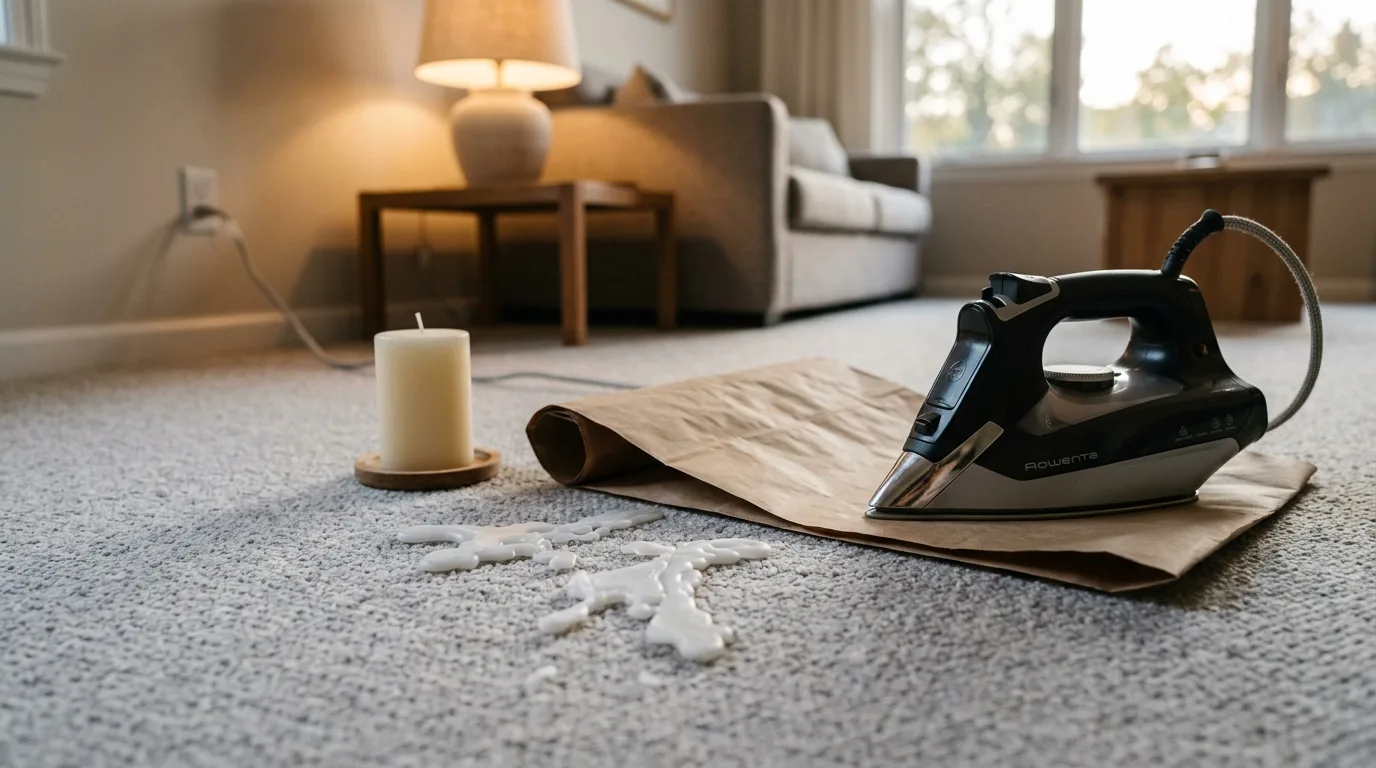
Let the wax harden completely, scrape off the excess, then lay a clean white towel or paper bag over the spot and run a warm iron on top. The heat melts the remaining wax and the cloth absorbs it. Do not try to clean soft, melted wax. You’ll spread it deeper into the fibers. Start with cold, then apply heat.
This guide walks through both the iron method and the freeze method, covers what to do about the colored dye some candles leave behind, and flags the mistakes that make things worse.
Let the wax harden first
The single most important thing: do not touch fresh candle wax. It feels counterintuitive, but cleaning warm wax presses it further down into the carpet pile.
Give it time to cool and firm up on its own. If you’re in a hurry, speed up the process:
- Fill a zip-lock bag with ice cubes.
- Lay it directly on the wax for 5 to 10 minutes.
- The wax will turn brittle and opaque.
Once it’s hard, use a dull butter knife or the edge of a credit card to break it apart and scrape up the pieces. Work from the outside edge toward the center so you’re not spreading fragments. Vacuum up what you can before moving to the next step.
The iron-and-towel method
This is the most reliable approach for wax that’s bonded into the carpet fibers.
What you need:
- A clothes iron
- Clean white cloths or plain white paper bags (no print, no color)
- A butter knife or spoon
- Rubbing alcohol (for colored wax dye, covered below)
Steps:
- Scrape and vacuum the hardened wax as described above.
- Set your iron to a low or medium setting. No steam. Steam can set stains and over-wet the carpet backing.
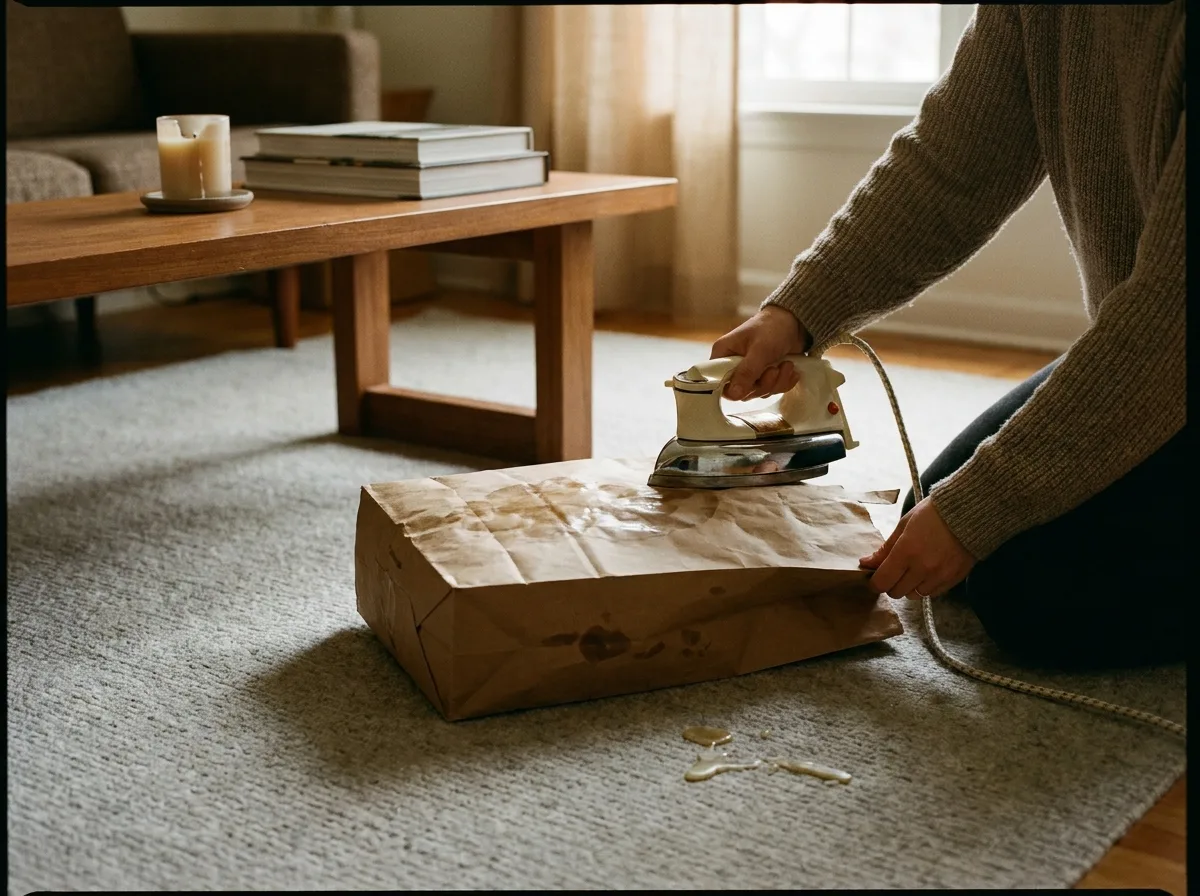
- Lay one layer of white cloth or paper bag flat over the wax spot.
- Place the warm iron on top of the cloth. Hold it there for 10 seconds, then lift.
- Check the cloth. You should see wax transferring from the carpet to the cloth.
- Move to a clean section of cloth and repeat. Never iron the same cloth section twice or you’ll re-deposit the wax.
- Keep going until no more wax transfers.
Temperature caution for synthetic carpet: Nylon and polyester fibers can melt or distort under too much heat. Keep the iron on a low setting and always put the cloth between the iron and the carpet. Never touch the iron directly to the fibers.
Berber, wool, and natural fiber carpets can handle slightly more heat, but the same principle applies: low and slow, always with a barrier cloth.
The freeze-and-scrape method
If you don’t want to use heat at all, the freeze method works well on smaller wax spills.
- Apply an ice pack or bag of ice to the wax for 10 minutes.
- Once the wax is fully brittle, shatter it gently with the back of a spoon.
- Scrape and vacuum up the pieces immediately.
- Repeat if needed until the wax is gone.
This method works best on wax sitting on top of the carpet rather than wax that’s soaked into the pile. For deeper spills, the iron method is more effective.
Removing colored wax dye
Plain white candle wax leaves no dye. Colored candles, red, green, navy, black, burgundy, almost always do. After you’ve removed the wax itself, you may still see a faint or vivid color stain in the fibers.
Here’s how to treat it:
- Dampen a clean white cloth with isopropyl rubbing alcohol (70% works fine).
- Blot the stain. Don’t rub. Rubbing spreads the dye and damages fibers.
- Work from the outside edge of the stain toward the center.
- Switch to a clean section of cloth with each blot.
- Allow to dry, then assess. Repeat if color remains.
For stubborn dye stains, a small amount of dry-cleaning solvent on a cloth can help. Test it on a hidden area of the carpet first.
Don’t pour alcohol or any solvent directly onto the carpet. Apply it to the cloth first. Too much liquid can saturate the backing and cause mold or odor problems underneath.
If the dye has been sitting for more than a day or two, it may have bonded to the fibers. At that point, professional stain removal is the most realistic option.
What works vs. what to skip
San Diego candle use spikes in a few situations: power outages during fire-season precautionary shutoffs, dinner gatherings, and everyday ambiance in apartments and homes. Regardless of how it happened, some cleanup approaches reliably make the situation worse.
Skip these:
- Digging at soft wax. Warm wax acts like glue. You’ll push it deeper and spread it wider.
- High heat on synthetic carpet. Polyester and nylon fibers can melt. Keep iron settings low.
- Colored cloths or paper with print. The dye from the cloth can transfer into your carpet.
- Hot water. It can re-liquify the wax and help it spread before you’ve removed it.
- Scrubbing. Always blot. Scrubbing damages fiber structure and spreads stains.
What actually works:
- Cold first, heat second.
- Clean white barrier cloth between iron and carpet.
- Patient blotting with alcohol for dye residue.
- Vacuuming between every step to remove loose debris.
If your carpet has a delicate fiber type or a dye stain that’s set in, see our guides on carpet fiber types and our full carpet stain removal guide for San Diego homeowners.
Frequently asked questions
Does an iron remove candle wax from carpet?
Yes. A warm iron set to low or medium heat melts the wax still bonded in the fibers, and a clean cloth or paper bag laid over the spot absorbs it as it liquifies. Always keep the iron on the cloth, not directly on the carpet, especially with synthetic fibers. No steam setting.
How do you get colored candle wax out of carpet?
Remove the wax itself first using the iron or freeze method. Once the wax is gone, treat the remaining color stain by blotting with a white cloth dampened with isopropyl alcohol. Work from the edges inward, and swap to a clean cloth section after each blot. For stubborn dye, dry-cleaning solvent can help. If the stain has been sitting for days, professional treatment is likely needed.
Will candle wax damage carpet permanently?
Plain wax, treated promptly and correctly, usually comes out without permanent damage. Colored candle dye is a bigger risk, particularly if it sits for more than a day or is scrubbed rather than blotted. Synthetic fibers that get overheated during the iron method can also sustain permanent damage. Work carefully, and call a professional if you’re unsure about your carpet type.
Can you freeze wax out of carpet?
Yes. Applying an ice pack makes the wax brittle so it can be broken apart and scraped off cleanly. This works well for wax that hasn’t penetrated deep into the pile. For wax that’s soaked in or spread across a larger area, the iron method usually pulls more wax out of the fibers. Many people use both: freeze and scrape first, then iron to lift what’s left.
What if the wax has been in the carpet for a long time?
Old, set-in wax is harder to remove but still treatable. The iron method is your best starting point. You may need more passes with fresh cloth sections. Dye stains from old colored wax may have bonded to the fibers and might not fully respond to alcohol. A professional carpet cleaning with hot-water extraction can often pull out residue that home methods can’t reach. See also our guide on red wine and tough stain removal.
If the wax is out but the carpet still looks off, or if you’re dealing with a dye stain that isn’t budging, Carpet Pros SD can help. We serve homeowners across San Diego County. Give us a call at (858) 925-5546 and we’ll tell you honestly whether a professional cleaning makes sense for your situation.