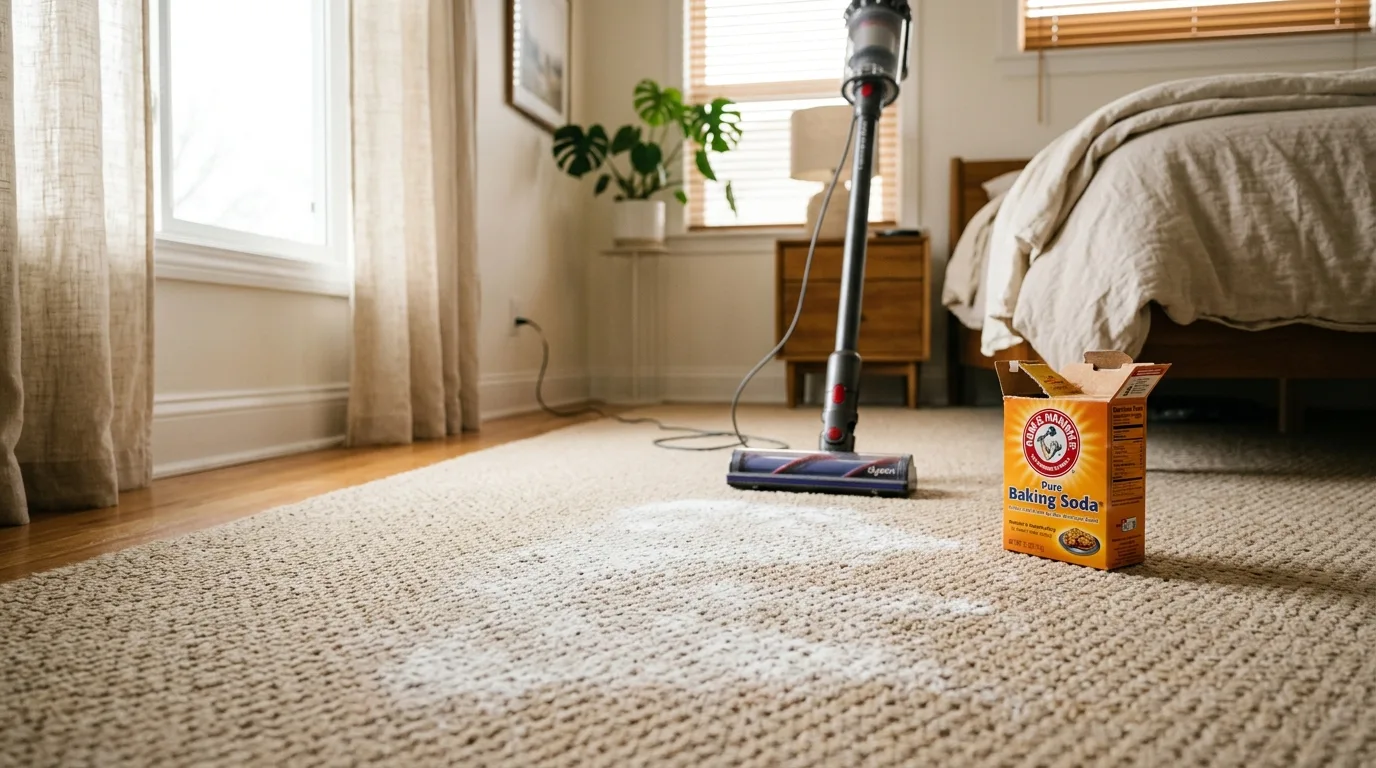
Baking soda works for surface odors like everyday mustiness and light pet smell, but it cannot fix deep urine odor soaked into the pad. For that you need an enzyme treatment, not a powder on top. If you’ve been sprinkling baking soda on a spot where your dog had an accident and wondering why the smell keeps coming back, that’s why.
This is what baking soda can and can’t do, how to use it correctly, and when a DIY approach stops being enough.
How baking soda actually works on carpet odor
Baking soda is sodium bicarbonate, which is a mild alkali. Most common carpet odors, things like sweat, food, pet dander, and general mustiness, come from acidic compounds. Baking soda neutralizes those acids on contact and absorbs some of the moisture that bacteria feed on. That combination breaks the smell cycle for surface-level odors.
The key word is “surface.” Baking soda sits on top of the fibers. It doesn’t penetrate down through the backing and into the carpet pad beneath, where serious pet urine damage actually lives. If urine has soaked through to the pad and dried there, the odor source is below where baking soda can ever reach.
For everyday freshening, it works well. For urine odor that keeps returning, you need a different tool entirely.
The right way to deodorize carpet with baking soda
Done correctly, this takes under an hour of active time, though the longer you leave the baking soda to sit, the better it works.
- Vacuum the carpet first. You want to pull up surface debris before you apply anything. This also opens up the fiber texture so the baking soda makes better contact.
- Sprinkle a thin, even layer of plain baking soda. You don’t need to dump the box. A light coat across the area is enough. Focus on spots that tend to hold odor, like high-traffic paths, areas near furniture, and anywhere pets sleep.
- Let it sit. At minimum 15 minutes. Overnight is better. If you can leave it for 8 hours, you’ll get noticeably more odor absorption than you will from a quick treatment.
- Vacuum thoroughly. Go slowly and make two passes in different directions. This is the step people rush, and it matters. Baking soda left in the carpet can clog vacuum filters over time and attract moisture in humid conditions.
- Check the result. For a light musty smell, this often does the job completely. If the odor is still there after one treatment, repeat once. If it’s still there after two treatments, the odor source is deeper than baking soda can reach.
Don’t use baking soda in a room with high humidity, like a bathroom-adjacent area or a carpeted laundry room, without vacuuming it up the same day. In humid conditions, baking soda absorbs moisture from the air and clumps into the carpet fibers, which is harder to vacuum out and can leave a residue.
How often to use baking soda on carpet
For general freshening with no odor problem, once a month is plenty for most San Diego households. If you have pets, once every two weeks keeps dander-related smell from building up.
Don’t make this a daily habit. Repeated baking soda treatments can leave mineral buildup in the carpet fibers over time, and it puts extra wear on your vacuum filter. Monthly treatment is enough unless you’re dealing with a specific odor issue.
Where baking soda falls short
Baking soda won’t solve these problems no matter how many times you apply it:
Deep pet urine. When a dog or cat urinates on carpet, the liquid travels through the fiber, through the backing, and into the pad. The pad holds urine like a sponge. Baking soda on top of the carpet fiber never touches the pad. The smell returns because the source is still there. This is where enzyme cleaners do real work: enzymes break down the uric acid crystals at the molecular level. For serious saturation, you need hot-water extraction with enzyme solution to pull the contamination out of the pad entirely.
Mold and mildew. If your carpet smells musty and the smell is persistent even after baking soda treatment, there may be mold growth in the backing or pad. This happens in San Diego coastal homes where humidity gets into carpet near exterior walls or around windows. Baking soda won’t kill mold. Professional cleaning or replacement is the right answer here.
Smoke odor. Smoke bonds to fibers at a chemical level that baking soda neutralization can’t reach. Hot-water extraction helps, but deeply smoke-affected carpet may not fully recover without replacement.
Baking soda vs. enzyme cleaner vs. professional extraction
Here’s a straight comparison so you know which tool fits which problem:
| Situation | Best approach |
|---|---|
| General mustiness, light everyday smell | Baking soda (DIY) |
| Fresh pet accident (within 24 hours) | Blot thoroughly, then enzyme cleaner |
| Old pet urine smell that keeps returning | Enzyme cleaner plus professional hot-water extraction |
| Whole-room odor buildup over months | Professional extraction |
| Smoke or mold odor | Professional extraction, possibly replacement |
San Diego pet households deal with a specific combination: warm weather keeps pets active and shedding year-round, and coastal humidity means carpet holds moisture longer than in drier climates. That combination accelerates odor buildup in ways that DIY treatment alone doesn’t fully address. If you have multiple pets or older carpet, a professional clean once or twice a year makes a real difference alongside your regular baking soda maintenance.
For more on what goes into a full pet odor removal job, or when to consider professional carpet cleaning over DIY, those pages go deeper on each.
You can also read our complete guide to pet urine odor removal for the full enzyme treatment process, or see how often San Diego homes should get carpet cleaned for a broader maintenance schedule. If you’re weighing DIY versus professional cleaning on cost, this breakdown runs the numbers.
Frequently asked questions
How long should you leave baking soda on carpet?
At minimum 15 minutes, but overnight gives you the best result. The longer baking soda sits, the more odor it neutralizes and the more moisture it absorbs. If you can treat the carpet before bed and vacuum in the morning, you’ll get noticeably more odor reduction than a quick 20-minute treatment.
Does baking soda get rid of pet urine smell?
Not reliably. Baking soda handles surface odors caused by pet dander, fur, and light accidents that haven’t soaked through. But when urine reaches the carpet pad, baking soda applied to the surface fibers can’t reach the source. For urine that has dried into the pad, enzyme cleaner is what actually breaks down the uric acid causing the smell. Old or repeated accidents usually need professional hot-water extraction.
Can you vacuum up baking soda without damaging your vacuum?
Yes, but vacuum it up slowly and make two passes. A fine powder like baking soda can clog filters faster than normal dirt if you rush through it. Check and clean your vacuum filter after a baking soda treatment, especially if you do this regularly. If your vacuum has a HEPA filter, tap it out or replace it more frequently when using baking soda monthly.
Is baking soda safe for all carpet types?
Generally yes. Baking soda is a neutral, non-toxic powder that won’t bleach or damage most carpet fibers. It’s safe around kids and pets after vacuuming. The one situation to watch is high-humidity rooms: in those spaces, baking soda can clump into the fibers if left too long, which makes it harder to vacuum out. In normal conditions, it’s one of the safest DIY carpet treatments you can use.
Can you mix baking soda with anything for better results?
Some people mix baking soda with a few drops of essential oil before applying it, which adds a scent on top of the odor neutralization. That’s fine and won’t harm the carpet. What you should not do is mix baking soda with vinegar and apply that wet to carpet. The fizzing reaction is mostly water and CO2, and getting carpet unnecessarily wet creates its own problems, especially if the backing traps that moisture.
How do I know if the smell needs professional cleaning?
If you’ve done two baking soda treatments and the odor comes back within a day or two, the source is deeper than surface-level. If you can smell it strongly after the carpet has dried from a cleaning attempt, that’s a sign of pad saturation. And if the smell has been present for months despite regular treatment, a professional extraction is going to be more cost-effective than continuing with DIY methods that aren’t reaching the actual source.
If baking soda isn’t cutting it and you’re in San Diego County, Carpet Pros SD handles pet odor, deep cleaning, and full extraction. Call us at (858) 925-5546 and we’ll give you a straight answer on what your carpet actually needs.