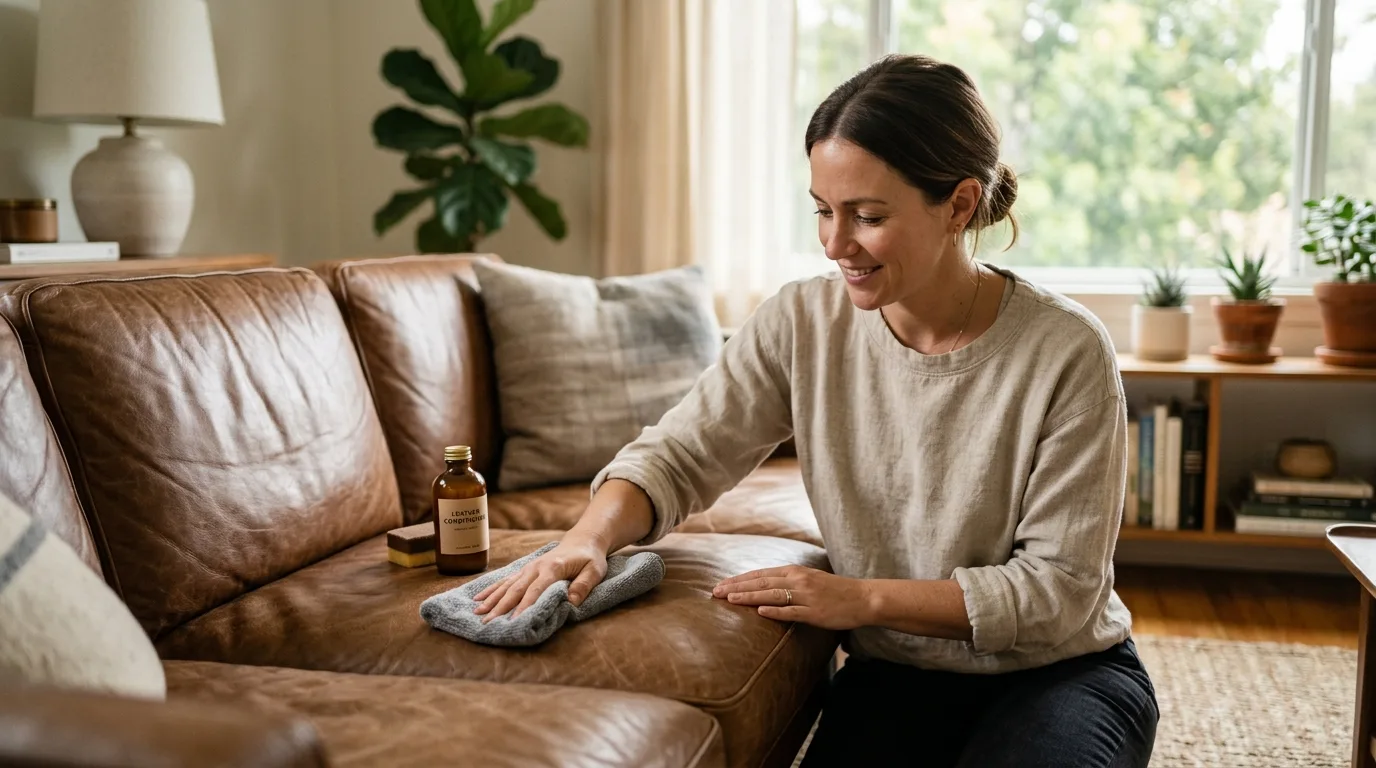
To clean a leather couch, vacuum the crevices, wipe it down with a barely-damp microfiber cloth, clean with a mild leather-safe solution, then condition it to prevent cracking. The steps don’t change much from couch to couch, but the products you use absolutely depend on what type of leather you’re working with. Get that part wrong and you can do permanent damage.
Here’s what you need to know before you start.
Know your leather type first
This is the step most people skip, and it’s the one that matters most. Different leather finishes respond very differently to water and cleaning products.
Protected (pigmented) leather is the most common type in everyday furniture. It has a surface coating that resists stains and moisture. Most standard leather sofas fall into this category. It’s the most forgiving to clean.
Semi-aniline leather has a light protective coating but still shows the natural grain. It’s softer and more breathable, but also more vulnerable to moisture and staining.
Aniline leather is the most natural and the most delicate. It has no protective coating. Water can stain it. Most cleaning products marketed for leather are too harsh for aniline. If you’re not sure what you have and your couch looks like it came from a high-end furniture store, treat it as aniline.
Faux or bonded leather looks similar but behaves completely differently. It doesn’t need conditioning and can be damaged by oil-based products. Check your furniture tag or manufacturer’s documentation before doing anything.
The water-drop test: Put a small drop of water on a hidden spot. If it beads up, you have protected leather. If it absorbs within a minute and darkens slightly, you likely have aniline or semi-aniline and should proceed with extra care.
Aniline and light-colored semi-aniline leather are genuinely difficult to clean without risking damage. If your couch was expensive or the leather feels unusually soft and supple, a leather care specialist is worth the cost. Fabric upholstery is different, that’s something we handle professionally across San Diego County.
How to clean a leather couch: step-by-step
These steps work well for protected leather. Adjust pressure and product strength down for semi-aniline.
What you’ll need:
- Vacuum with a soft brush attachment
- Two clean microfiber cloths
- Mild dish soap or a dedicated leather cleaner
- Warm water
- Leather conditioner
Step 1: Vacuum first. Use a soft brush attachment and go into every crevice. Crumbs and grit act like sandpaper when you start wiping. Don’t skip this.
Step 2: Mix a mild cleaning solution. A few drops of mild dish soap in a bowl of warm water works for most protected leather. Alternatively, use a leather-specific cleaner, these are pH-balanced for the material.
Step 3: Wipe with a barely-damp cloth. Wring your microfiber cloth until it’s close to dry. You want moisture, not wetness. Excess water can seep into seams and weaken the leather or cause mold underneath.
Step 4: Clean in sections. Work in small areas, about two square feet at a time. Use gentle circular motions. Don’t scrub. If you’re using soap, keep suds minimal.
Step 5: Wipe away residue. Use a second clean, dry microfiber cloth to remove any soap or solution left on the surface.
Step 6: Let it air dry completely. Keep it away from direct sunlight and don’t use a hair dryer or fan to speed things up. Let the leather rest for at least an hour before sitting on it.
Step 7: Apply conditioner. This is the step most people skip. Don’t.
Why conditioning matters, especially in San Diego
Leather is skin. Without moisture, it dries out, stiffens, and eventually cracks. Cleaning strips some of the natural oils from the surface, which is why conditioning after every cleaning session matters.
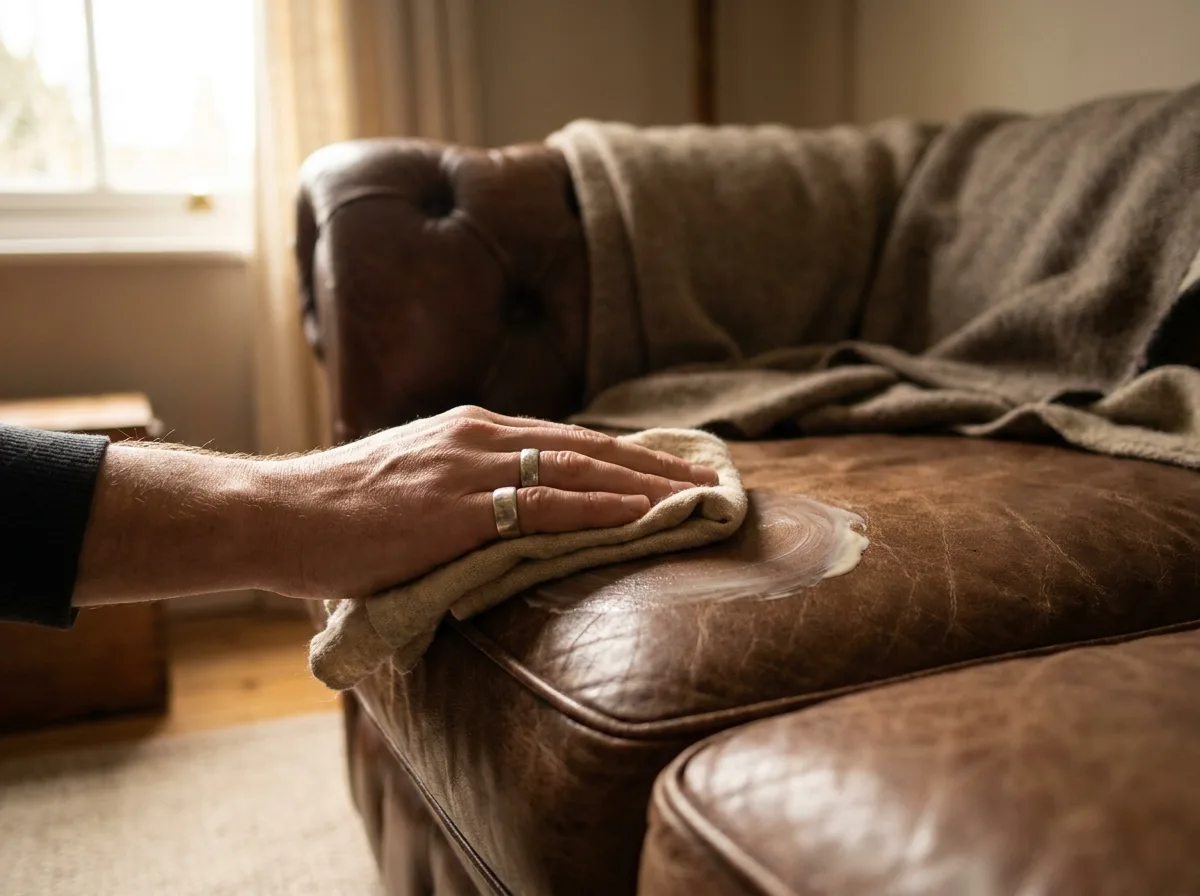
Apply a small amount of leather conditioner to a clean cloth and work it into the leather in circular motions. Let it soak in for a few minutes, then buff off the excess. Most conditioners are clear and won’t change the color.
San Diego’s dry, sunny climate accelerates this process. Low humidity dries leather faster than in more humid climates. If your couch sits near a window that gets direct afternoon sun, that UV exposure is fading and drying the leather even when you’re not using it. In San Diego, plan to condition your leather couch every two to three months rather than the twice-a-year recommendation you’ll see on most product labels. If you notice any stiffness or lightening of color at the seams, condition immediately.
UV-protective leather conditioners are worth using here. They add a layer of protection against the sun damage that comes with year-round San Diego light.
Spot-treating spills and stains
Act fast. Fresh spills are always easier to deal with than dried-in stains.
For liquid spills: Blot immediately with a dry cloth. Don’t wipe or spread the liquid. Blot from the outside toward the center. Once you’ve absorbed as much as possible, let the area air dry before applying conditioner.
For oil-based stains: Sprinkle a small amount of cornstarch or baking soda on the stain. Let it sit for a few hours to absorb the oil, then brush it off gently. Follow with your standard cleaning solution.
For ink: This is one of the harder stains to remove from leather. Rubbing alcohol on a cotton swab can work on protected leather if caught quickly, dab, don’t rub, and test on a hidden spot first. For older or set-in ink stains, a leather specialist is the safer choice.
What not to do
This list matters as much as the cleaning steps above.
Don’t use all-purpose cleaners. Most contain harsh chemicals, bleach, ammonia, or alcohol in concentrations that strip leather’s finish and oils.
Don’t soak the leather. More water doesn’t mean cleaner. It means water working into the seams, backing, and foam, which leads to mold and structural damage.
Don’t use baby wipes as a long-term solution. Some baby wipes are fine in a pinch for a quick surface clean, but most contain moisturizers and additives that build up on leather over time and can degrade the finish.
Don’t dry it with heat. No hair dryers, no space heaters, no direct sun exposure during drying. Heat causes leather to stiffen and crack.
Don’t use a single cloth for cleaning and conditioning. Cross-contamination affects how well each product works.
For more on caring for upholstered furniture, see our upholstery and sofa cleaning guide and our upholstery cleaning service page.
Frequently asked questions
What is the best thing to clean a leather couch with?
A barely-damp microfiber cloth and a small amount of mild dish soap diluted in warm water works well for most protected leather couches. For a dedicated product, look for a pH-balanced leather cleaner. Avoid anything with bleach, ammonia, or alcohol unless the product is specifically formulated for leather. Always follow cleaning with a leather conditioner.
Can you use baby wipes on a leather couch?
In a pinch, yes, but not as a regular cleaning method. Baby wipes can remove light surface dirt, but most contain additives and moisturizers that build up on leather over time. Regular use can dull the finish or leave a residue that attracts more dirt. Stick to a proper leather cleaning solution for routine care.
How often should you condition a leather couch?
For most climates, conditioning every six months is a common recommendation. In San Diego, condition every two to three months. The dry air and sun exposure here dry out leather faster than the national average. If the leather starts feeling slightly stiff or you notice the color looks faded near the seams, that’s a sign it needs conditioning now rather than later.
Does cleaning leather prevent cracking?
Cleaning alone doesn’t prevent cracking, conditioning does. Cleaning removes dirt and oils that can degrade the surface. Conditioning replenishes the moisture leather needs to stay flexible. The combination of both, done regularly, is what keeps leather from drying out and cracking. Cracked leather is very difficult to restore without professional help, so prevention is worth the effort.
Can I use coconut oil or olive oil to condition leather?
It’s not recommended. Natural food oils can go rancid over time inside the leather, leading to odor and potential breakdown of the material. They can also darken leather permanently. Use a product specifically made for leather conditioning, they’re formulated to absorb correctly and won’t leave behind residue or smell.
What should I do if my leather couch is already cracking?
Stop cleaning it with water-based products, which can worsen cracking. Apply a leather conditioner designed for dry or cracked leather and let it absorb fully. For surface-level cracks, a leather repair kit can help fill and blend the damaged area. Deep cracks or large areas of peeling usually need a leather restoration specialist. At that point, DIY approaches typically make things worse.
We deep-clean fabric upholstery professionally across San Diego County, from Chula Vista to Carlsbad. If you have a fabric sofa that needs a real clean, not just a surface wipe, give us a call at (858) 925-5546. For more on keeping your home clean and comfortable, check out our guides on how often to clean carpet in San Diego and carpet fiber types.