To get rid of carpet beetles, vacuum every infested area daily for two weeks, steam-clean affected carpet and rugs, and wash or freeze any fabric the larvae have touched. That combination breaks the life cycle at multiple points. Skip any one of those steps and you’ll likely deal with a second wave in a few months.
Here’s what you need to know to do this right, and when it makes sense to call someone in.
How to identify carpet beetles (and tell them from moths)
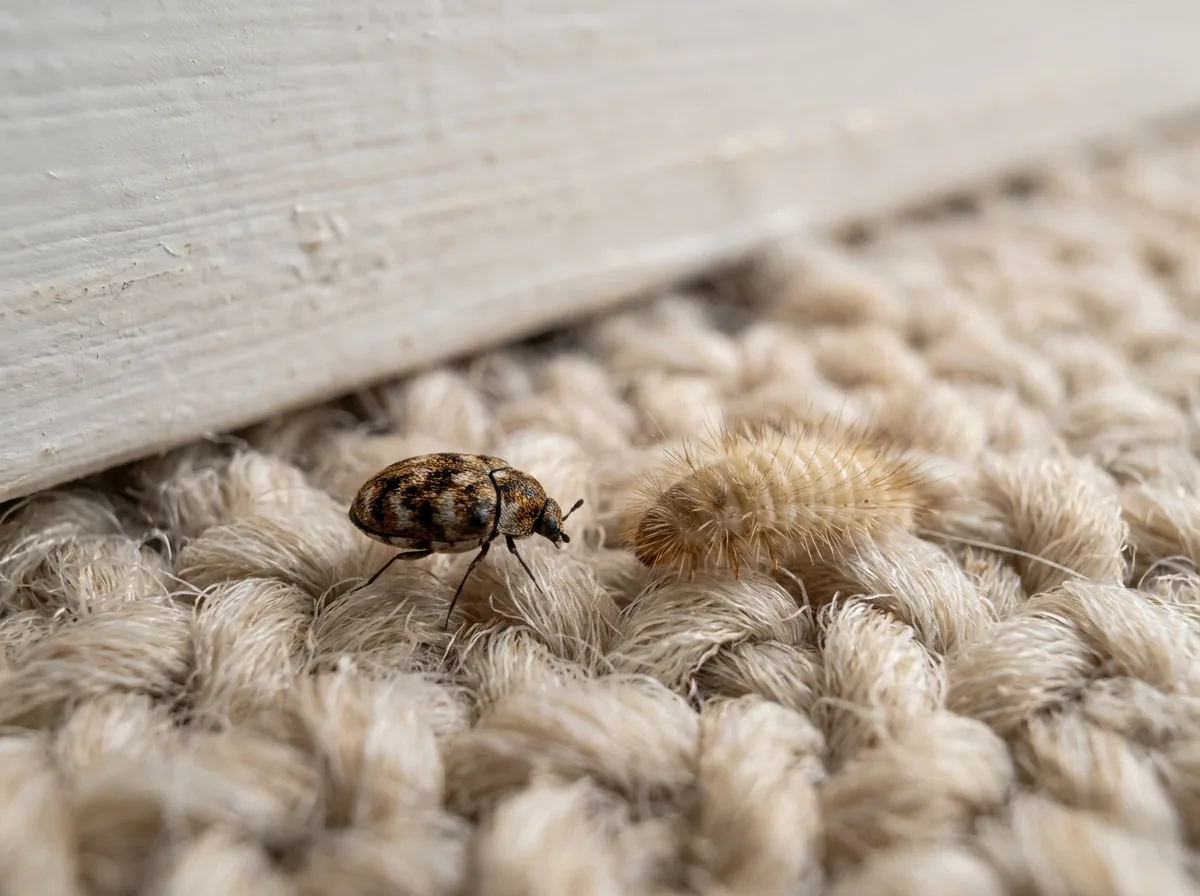
Carpet beetles are small, oval-shaped insects, roughly 2 to 4 millimeters long. Adults are usually black, or black with white and orange-brown patches depending on the species. You might spot one near a window or light source since adults are drawn to light.
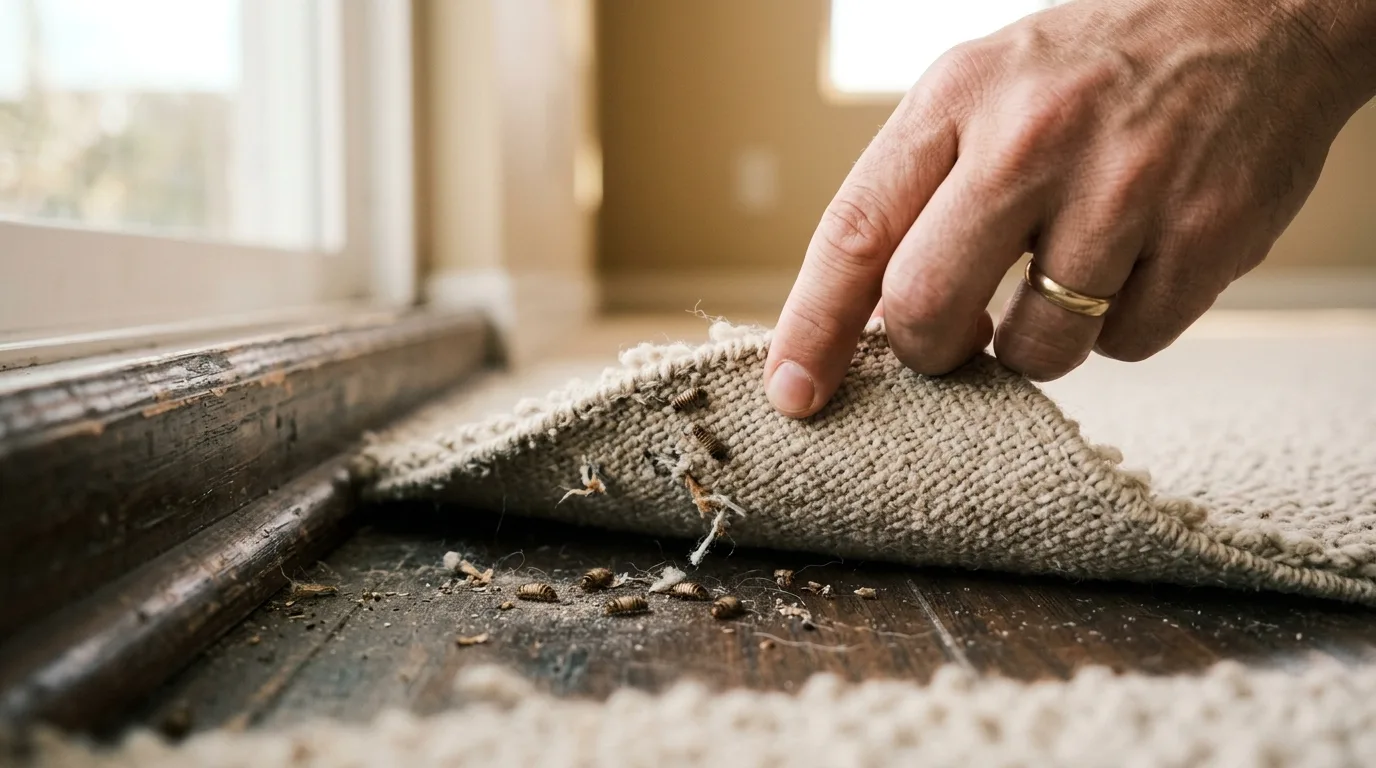
The real damage, though, comes from the larvae, not the adults. Larvae are brown, carrot-shaped, and covered in bristly hairs. They’re usually 4 to 5 millimeters long and move slowly. If you see them, you have an active infestation.
Carpet beetle damage looks like irregular, patchy bare spots in carpet or fabric. Clothes moths leave more uniform damage and tend to stay in darker areas like closets. Carpet beetles are bolder about roaming under furniture and along baseboards.
Check for these signs:
- Shed larval skins (tan or brown, papery husks)
- Small irregular worn patches in wool rugs or carpet
- Tiny fecal pellets that look like coarse pepper
- Adult beetles near windows in spring
Where carpet beetles hide in your home
Carpet beetles don’t cluster in one obvious spot the way some pests do. They spread.
Their favorite hiding spots are carpet edges along baseboards, under heavy furniture that doesn’t move often, inside closets where wool or natural-fiber clothing is stored, inside air vents and ductwork, inside upholstered furniture (especially wool, silk, or leather), and in stored pantry goods like dried flowers, grains, or spices.
In San Diego, the mild coastal climate makes carpet beetles a persistent problem year-round. There’s no hard winter freeze here to kill off larvae or eggs. Older homes in neighborhoods like North Park, Hillcrest, Ocean Beach, and Clairemont often have original wool carpet or hardwood floors with area rugs made of natural fibers, both of which are prime beetle habitat. If your home has wool rugs, that’s your highest-risk area.
The removal process: step by step
This takes real effort over two weeks. Don’t expect one afternoon to fix it.
Step 1: Identify every affected area first. Pull furniture away from walls, lift rug edges, check closet floors. Don’t start treating until you know the full scope.
Step 2: Remove and bag infested items. Clothing, linens, or small rugs that have visible larvae or damage should go directly into sealed plastic bags before you wash or treat them. This prevents larvae from spreading as you move things.
Step 3: Vacuum aggressively, every day. Use a HEPA-filter vacuum if you have one. Go slowly along baseboards, under furniture legs, inside closets, and across every inch of carpet in the affected rooms. Empty the canister or replace the bag immediately after each session, and take the trash outside. Do this daily for at least two weeks.
Step 4: Wash or freeze affected fabric. Wash clothing and linens on the hottest safe setting and dry on high heat. For items you can’t wash, seal them in a plastic bag and freeze for at least two weeks at 0°F. Both heat and sustained cold kill larvae and eggs.
Step 5: Steam-clean carpet and rugs. High-heat steam (above 120°F at the fiber) kills larvae and eggs the vacuum misses. Pay attention to edges and corners where larvae concentrate. This is the step most DIYers skip, and it’s often why the infestation comes back.
Step 6: Treat with an appropriate insecticide if needed. For severe infestations, a borate-based powder or spray labeled for carpet beetles can be applied along baseboards and under furniture. Follow label directions carefully. Avoid broad indoor spraying, which rarely reaches larvae hiding deep in carpet pile.
Step 7: Seal entry points. Carpet beetles enter through windows, doors, and vents. Check window screens for tears and consider vent covers with fine mesh.
What actually works vs. what wastes your time
Not all advice you’ll find online is worth following. Here’s a quick breakdown.
Works: Daily vacuuming with immediate bag disposal, hot water extraction cleaning, laundering on high heat, freezing, borate treatments along baseboards, sealing entry points.
Doesn’t work well: Moth balls (they repel moths, not carpet beetles, and are toxic in enclosed spaces), essential oil sprays (may deter adults but don’t kill larvae or eggs), single-session vacuuming without follow-up, foggers or bug bombs (they rarely penetrate carpet pile deeply enough to reach larvae).
DIY is fine when: You caught the infestation early, it’s limited to one or two rugs or a closet, and you’re willing to vacuum daily and steam-clean properly.
Call a pro when: The infestation is widespread across multiple rooms, you’ve done two rounds of DIY treatment and it came back, you have valuable wool rugs or antique carpet you don’t want to risk, or you simply don’t have the equipment for proper hot-water extraction.
If you have a wool rug that’s been affected, be especially careful. Wool is the most vulnerable fiber, and aggressive DIY treatment can cause shrinkage or color bleed. Professional cleaning is often the safer call there. Our guide to carpet fiber types explains which materials are most at risk.
How to prevent carpet beetles from coming back
Prevention is mostly about reducing what attracts them and catching new ones early.
Vacuum along edges and under furniture at least once a week. Store natural-fiber clothing in sealed containers or garment bags, not open closets. Check dried flower arrangements and pantry goods, since adult beetles feed on pollen and can hitch rides inside on cut flowers. If you buy secondhand rugs or furniture, inspect them before bringing them into the house.
In San Diego, one of the most common entry points is fresh-cut flowers from a garden or market. Adults are pollinators, so they’re outdoors in large numbers. A quick shake of cut flowers before bringing them inside can make a difference.
Professional cleaning every 12 to 18 months also helps. How often you should clean your carpet in San Diego depends on household factors, but regular hot-water extraction removes the organic debris (skin cells, pet hair, food particles) that larvae feed on, making your home a less hospitable environment.
Our carpet cleaning service and rug cleaning service both use truck-mounted hot-water extraction, which reaches temperatures that kill larvae and eggs deep in the pile.
Frequently asked questions
Will carpet cleaning kill carpet beetles?
Yes, professional hot-water extraction reaches temperatures above 120°F, which kills carpet beetle larvae and eggs on contact. It also removes the organic debris larvae feed on. It’s most effective as part of a complete treatment plan, not a standalone fix, since it won’t reach beetles hiding in furniture, vents, or clothing.
What kills carpet beetle larvae instantly?
High heat is the fastest option. Steam above 120°F kills larvae on contact. Washing fabric at the hottest safe setting and drying on high heat works for clothing and linens. For carpet, professional steam cleaning or hot-water extraction is the most reliable method. Freezing at 0°F also kills larvae, but takes at least two weeks.
Are carpet beetles harmful to people?
Carpet beetles don’t bite humans, and they don’t transmit disease. However, the bristly hairs from larvae can cause skin irritation, a rash, or eye irritation in some people, especially children. The real harm is to your belongings. Larvae can destroy wool rugs, silk, leather, and natural-fiber clothing if left unchecked.
How long does it take to get rid of carpet beetles?
With consistent treatment, most infestations are under control within two to four weeks. The life cycle from egg to adult takes two to three months, so you need to sustain the vacuuming and treatment long enough to break the cycle completely. Stopping too early is the most common reason infestations return.
Do I need a pest control company or can a carpet cleaner help?
It depends on the severity. A pest control company handles chemical treatment and whole-home inspection. A professional carpet cleaner handles the fabric side: killing larvae in carpet, rugs, and upholstery through heat, and removing the food sources that keep the infestation going. For most households, combining both services gives the most thorough result. For mild cases, professional cleaning alone often resolves it.
Can carpet beetles live in hardwood floors?
Carpet beetles prefer natural fibers, but they can hide in the gaps and cracks between hardwood floorboards, and they’ll live in any wool rug or fabric item on top of those floors. If you have hardwood with area rugs, focus your treatment on the rugs and the floor perimeter. Vacuuming along the edges of each board is worth doing during active treatment.
If you’re dealing with a carpet beetle problem in San Diego County and want to know if professional cleaning can help, give us a call at (858) 925-5546. We offer same-week service across the county and can walk you through what makes sense for your situation before you commit to anything.