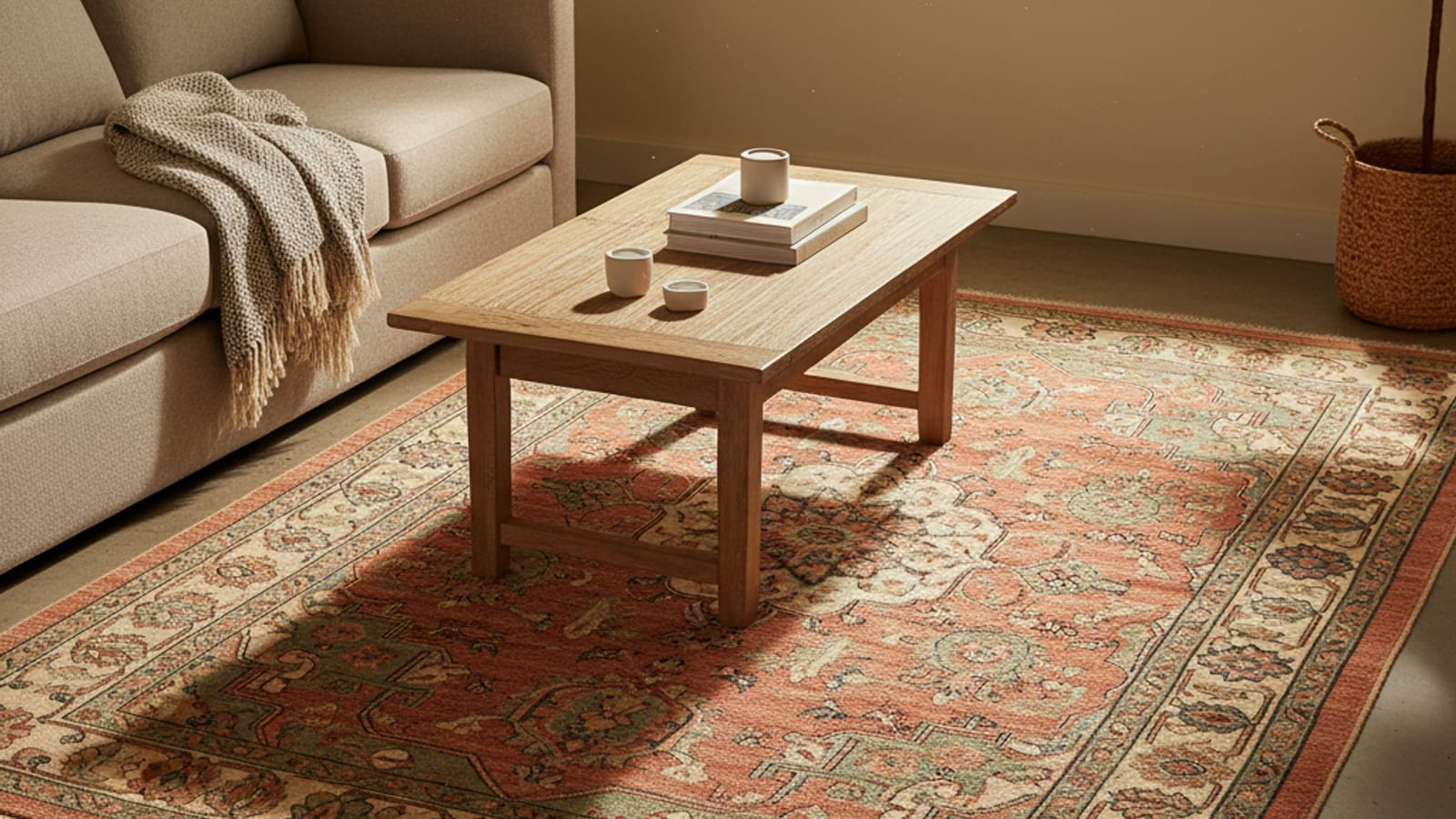
Wool rugs, especially hand-knotted Orientals and Persian styles, are a different animal from wall-to-wall synthetic carpet. Built to last a century or longer when cared for correctly, destroyed in an afternoon when treated like nylon. Here’s what you actually need to know.
Why wool is different
Wool has three traits that change how it needs to be cleaned:
1. Natural lanolin
Wool fibers carry a small amount of lanolin, a natural oil that makes them water-resistant and stain-resistant. This is why you can spill red wine on a fresh wool rug and blot it up with no lasting mark. But aggressive cleaning strips lanolin. Once it’s gone, the rug loses its natural protection and stains hold more easily.
What this means: clean wool less often, gentler when you do.
2. Shrinks with heat and agitation
Wool fibers are covered in microscopic scales. When they get hot and wet at the same time, and you agitate them (scrub, brush, spin), the scales lock together. That’s felting. Felting is irreversible and reduces rug size by 10–30%.
What this means: cold water only. No hot extraction. No rotary brush machines.
3. Natural dyes on antique pieces
Older hand-knotted rugs use vegetable dyes that bleed when aggressively wetted, especially reds and deep blues. A modern chrome-dye rug is stable; an antique Persian is not.
What this means: colorfast test before any wet cleaning. On antique pieces, in-plant cold immersion with pH-neutral soap is the only safe method.
Weekly maintenance: vacuum, but carefully
Wool rugs need vacuuming like any other rug, but technique matters.
- Low-power setting. High-suction beater bars pull loops and stretch knots.
- Bar off, if possible. Use suction-only mode. The beater bar on a typical upright is too aggressive for wool.
- Vacuum both directions. With the pile, then against. Both are fine; both matter.
- Don’t vacuum the fringe with the beater bar. You’ll mangle it. Hand-vacuum or tuck the fringe under before running the vacuum.
- Rotate the rug once a quarter. Prevents uneven wear from foot traffic patterns. See our rug rotation guide.
Weekly for high-traffic pieces, every two weeks for lower-use ones. More isn’t better, because over-vacuuming stresses knots.
When to clean
Wool rugs need professional cleaning less often than synthetic wall-to-wall, not more. The guideline:
- Annual cleaning: for high-traffic pieces or household with pets
- Every 2–3 years: for most living-area wool rugs
- Every 3–5 years: for low-use or bedroom pieces
The test: does the rug still release dust when you beat it outside (hanging over a railing, shaking gently)? If yes, it’s still vacuuming reasonably clean and not yet due. If you beat it and nothing comes out but the rug still looks tired, it’s time.
In-home vs in-plant cleaning
The big decision is where the rug gets cleaned.
In-home (on-site) cleaning
We bring a low-moisture wool-safe extraction tool to your home, work it through the rug, extract. The rug stays flat in place.
Right for: modern machine-made wool rugs, wool-blend rugs, synthetic-mixed pieces, larger rugs where pickup is a hassle, rugs with stable dyes and no major issues.
Not right for: hand-knotted antique Orientals, silk rugs, anything with prior dye-bleeding evidence, rugs with heavy pet-urine saturation.
In-plant (pickup) cleaning
We pick up the rug, take it to our facility, wash it flat in controlled immersion, dry on a rack with controlled airflow, deliver back.
Right for: hand-knotted rugs, antique pieces, silk, wool with stains that need dwell time, any rug with layered pet odor.
Takes longer: 3–7 days door-to-door. Wool dries slowly on purpose, and forcing it with heat causes shrinkage.
Pickup and delivery included for jobs over 25 sq ft inside San Diego County.
What NOT to do with wool
Every rule from the synthetic playbook flips for wool:
- Don’t use rental carpet cleaners. Wrong pH, too hot, too aggressive.
- Don’t use OxiClean or hydrogen peroxide. They strip natural dyes and lanolin.
- Don’t soak with water to dilute a spill. It causes dye bleeding and fiber swell.
- Don’t use steam cleaners (household type). Heat plus moisture plus agitation equals felting.
- Don’t beat the rug in the sun for long periods. UV fades vegetable dyes.
- Don’t store wool in plastic. It needs to breathe, or you get moth-and-moisture damage.
- Don’t hang wool rugs to dry. The weight pulls knots out of shape.
If you have a wool rug and you’re tempted to “just quickly shampoo it myself,” don’t. Call us for a phone consult before you try anything.
Pet accidents on wool
Pet urine on wool is the single most common way we see expensive rugs get destroyed. Here’s why:
- Urine is acidic and dyes react to acid
- Enzyme cleaners are often too alkaline for wool dyes
- DIY “deep cleaning” at this point floods the rug and spreads the contamination
- Homeowners use steam mops trying to sanitize, and that felts the fiber
What to do instead: blot the fresh spot with a dry towel. Don’t add water, don’t add enzyme, don’t scrub. Call us. Same-day in-plant pickup for pet accidents on wool rugs is a service we offer specifically because the DIY attempts are so damaging.
Moth prevention
Wool’s other threat is moths. Clothes moths lay eggs on wool; the larvae eat the fibers, leaving small holes and loose pile. Prevention:
- Rotate and vacuum regularly. This disturbs any eggs before hatching.
- Air the rug outside in sun once a year. UV kills larvae.
- Store clean. Dirty wool attracts moths. Never roll and store a dirty wool rug.
- Check the back of the rug every 6 months. Moth damage often starts from below.
If you spot small moth holes or fiber dust under the rug, it’s time for an immediate cleaning plus mothproofing treatment before storage.
Buying used or inherited wool
Before you bring an inherited or thrifted wool rug into your house:
- Check underside for moth damage
- Roll it tight, look for dust puffing out (larvae waste)
- Sniff for any musty smell, which suggests mildew (requires in-plant immersion to fix)
- Check fringe for wear and straightness
- Examine dye color at tight curves (evidence of prior bleeding)
If any of those are flags, clean it before installation. A $200–400 in-plant clean at acquisition is much cheaper than bringing moth eggs or mildew into your house.
The long game
A well-cared-for wool rug actually looks better at 30 years old than at 5. The pile softens, natural fibers develop a patina, and the rug settles into the room. This is the opposite of synthetic. Synthetic carpet ages in reverse, getting worse with time. Wool that’s cared for is an asset.
The economics: a quality hand-knotted rug is often cheaper over 30 years than replacing wall-to-wall carpet every 10. Professional in-plant cleaning every 2–3 years at $4–$7/sq ft is a rounding error against that replacement cycle.
Quick reference: when to call us
- Fresh pet accident on wool → same day, blot only, wait for us
- Red wine or protein spill → blot dry, call before treating
- Musty smell after a humid stretch → in-plant pickup
- Annual or biennial maintenance → schedule during dry season (April or October)
- Pre-move or pre-sale freshening → book 1 week ahead
Call (858) 925-5546 for pickup scheduling or a phone consult. We clean wool correctly: slow, cold, and careful.