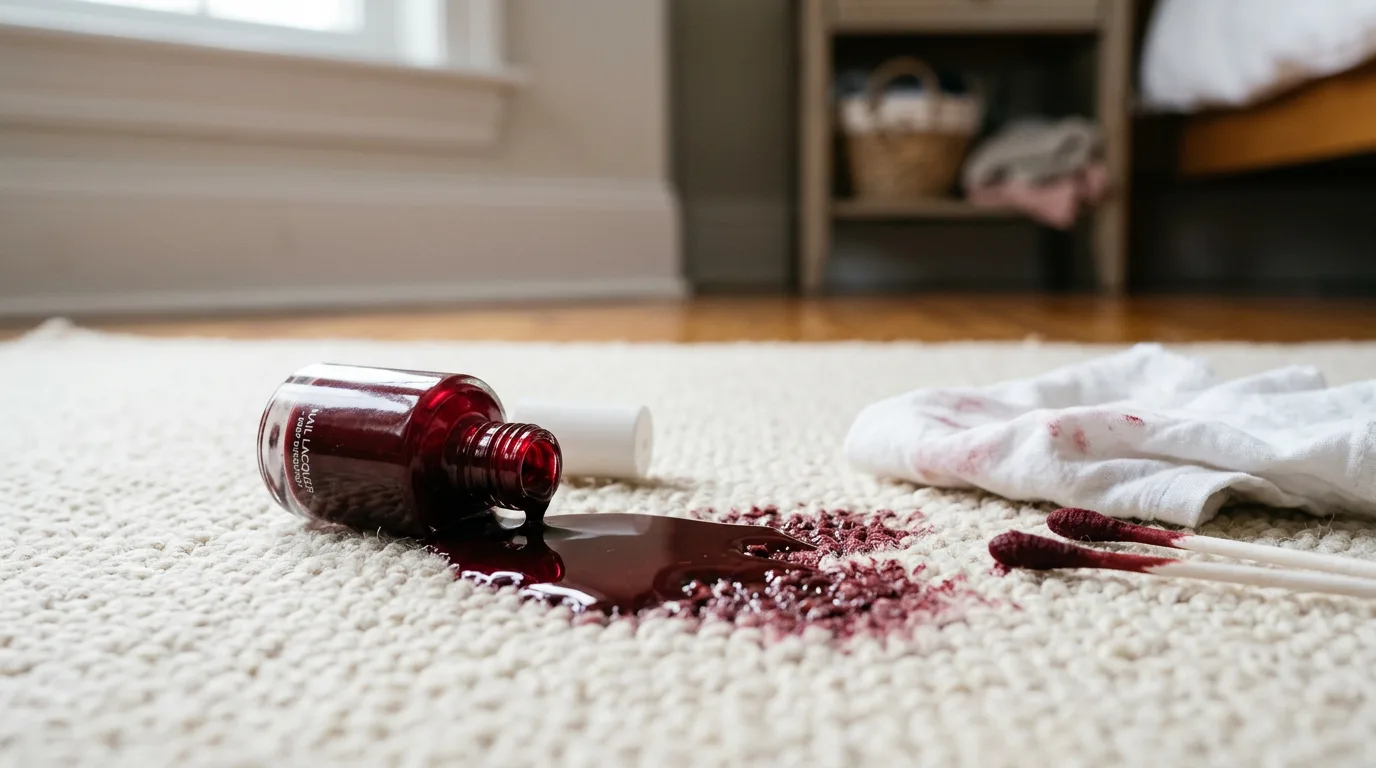
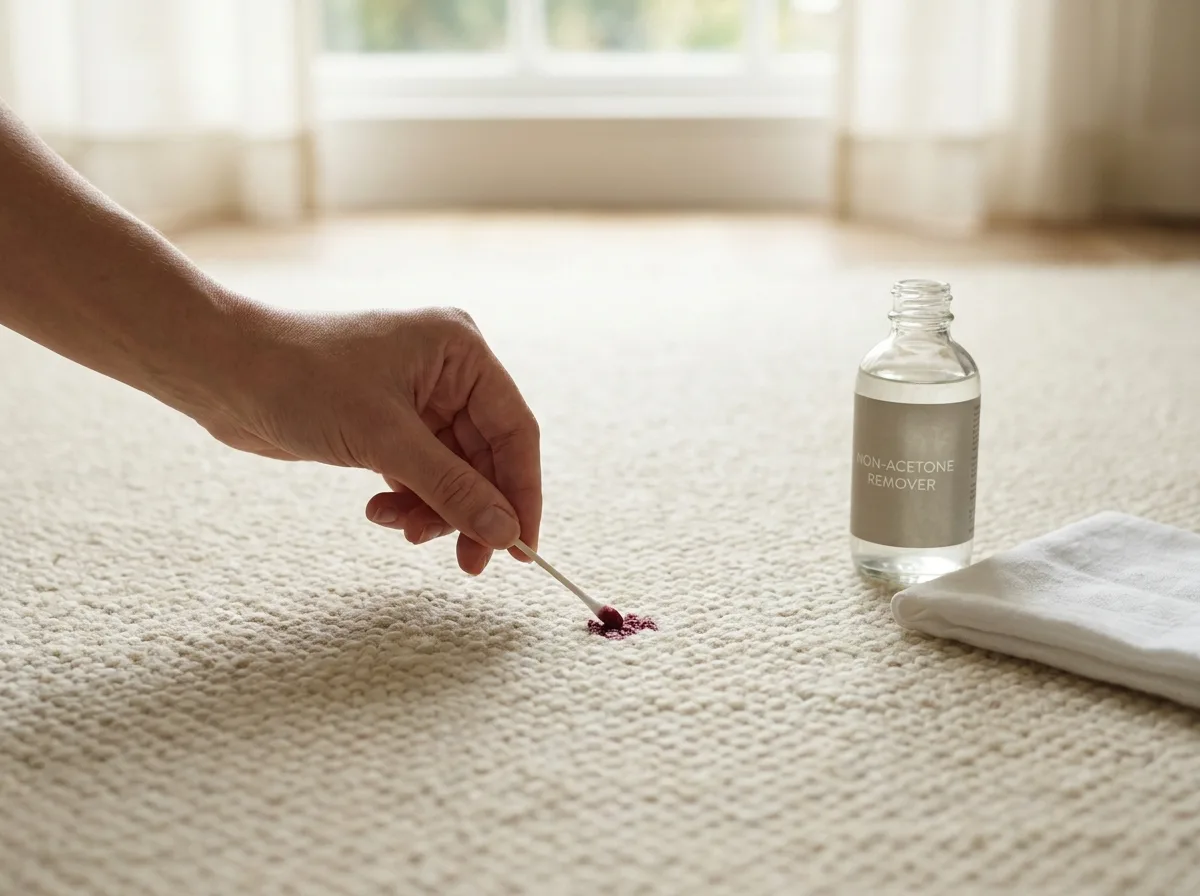
Blot up wet nail polish immediately, then dab with non-acetone remover on a white cloth, working from the outside of the stain inward. Always test acetone-based remover in a hidden area first, it can dissolve synthetic carpet fibers permanently.
Nail polish on carpet feels like a disaster, but it’s manageable if you move fast and use the right product for your fiber type. The treatment differs depending on whether the polish is still wet or has already dried, and getting that part right matters more than anything else.
The fiber warning you need to read first
This is the step most DIY guides skip, and it’s the one that causes the most damage.
Acetone, the active ingredient in most nail polish removers, can melt or permanently discolor certain synthetic fibers. Acetate, triacetate, and some nylon blends are particularly vulnerable. If your carpet is polyester, olefin, or a blended synthetic, acetone can cause the fibers to clump, mat, or dissolve entirely in the treated spot.
Wool is generally more tolerant of acetone, but still warrants a test before you apply it broadly.
Before using any solvent, find a hidden area, inside a closet, under a piece of furniture, and apply a small amount to the carpet. Wait 60 seconds and blot dry. Check the fibers. If they look the same, you’re good to proceed. If they feel stiff, sticky, or change color, stop and switch to a non-acetone remover.
If you’re not sure what kind of carpet you have, our guide to carpet fiber types walks you through how to identify common materials. San Diego homes tend to have a mix, older homes in areas like Tierrasanta or El Cajon often have nylon pile, while newer builds in Chula Vista and Carlsbad frequently feature polyester blends. That distinction changes which products are safe.
How to remove wet nail polish from carpet
Speed is your biggest advantage here. The longer polish sits, the more it bonds to the fibers.
- Don’t rub. Grab a clean white cloth and blot, press down and lift straight up. Rubbing spreads the stain and works polish deeper into the pile.
- Remove as much as possible dry. Blot from the outside edge toward the center until you’ve lifted what you can without adding any liquid.
- Apply non-acetone remover to a cloth, never pour it directly onto the carpet. Dampen a corner of a white cloth and dab at the remaining stain from the outside in.
- Blot with a dry section of cloth after each application. Rotate to a clean section every few passes so you’re not re-depositing polish you just lifted.
- Rinse the area with cold water. Dampen a fresh cloth with plain cold water and blot to remove any solvent residue. Leftover remover can attract dirt and leave a new stain.
- Press a stack of paper towels over the spot and weight them down with something heavy. Leave for 15 minutes to wick up remaining moisture.
How to remove dried nail polish from carpet
Dried polish takes more patience, but it still comes out with the right approach.
- Scrape off the solid surface layer with a dull butter knife or the edge of a credit card. Work carefully so you don’t pull or cut the fibers. This step removes the bulk before any solvent gets involved.
- Soften what remains. Apply a small amount of non-acetone nail polish remover to a white cloth. Dab it onto the stain and let it sit for 30 to 60 seconds. The solvent needs time to re-dissolve the dried lacquer.
- Dab and blot, working inward. Use a fresh section of cloth for each pass. You’ll likely see color transfer to the cloth, that’s progress.
- Repeat as needed. Dried polish usually takes three to five rounds of softening and blotting before the stain breaks down fully.
- Finish with cold water rinse and weighted paper towels, same as with wet polish.
Alternatives if acetone isn’t safe for your carpet
If your spot test shows acetone is a problem, or if you don’t have nail polish remover on hand, these options can work on certain stains:
Non-acetone nail polish remover is the safest starting point. It contains ethyl acetate instead of acetone and is less aggressive on synthetic fibers. It works more slowly on dried polish, but it’s far less likely to cause fiber damage.
Rubbing alcohol (isopropyl, 70% or higher) can break down nail polish. Apply it to a cloth and dab, same method as above. It evaporates faster than acetone, which reduces the risk of over-saturating the carpet backing.
Hairspray is a common suggestion online, and it can work on fresh stains because older alcohol-based formulas acted as a solvent. Most modern hairsprays are water-based and work poorly. If you try it, use an older aerosol formula and blot immediately, don’t let it dry on the carpet.
Dish soap and cold water can help lift remaining residue after you’ve done the main work with a solvent. It won’t dissolve nail polish on its own, but it’s a good final rinse step.
For a broader look at how to handle different stain types, see our carpet stain removal guide for San Diego homeowners.
What not to do
A few common mistakes make nail polish stains permanent or create new problems:
- Don’t pour remover directly onto the carpet. It over-saturates the backing, can warp the pad underneath, and spreads the stain. Always apply to a cloth first.
- Don’t scrub in circles or outward. Scrubbing spreads the stain and permanently damages carpet fibers. Always work inward with a straight blotting motion.
- Don’t use hot water. Heat sets many stains, including nail polish. Always use cold water for rinsing.
- Don’t let the carpet stay wet. Prolonged moisture leads to mold in the backing and subfloor. Blot thoroughly and use a fan to speed drying.
- Don’t assume one product works on all fiber types. What works on a nylon carpet in Mission Hills might damage a polyester carpet in Santee. Always spot-test first.
What works vs. what to skip
| Method | Works best on | Caution |
|---|---|---|
| Non-acetone remover | All fiber types | Slower on dried stains |
| Acetone remover | Wool, nylon | Spot-test first; avoid synthetics |
| Rubbing alcohol | Most fibers | May lighten some carpet dyes |
| Hairspray | Fresh stains only | Avoid modern water-based formulas |
| Dish soap | Residue after solvent | Not strong enough alone |
If you’ve got a red wine stain alongside the nail polish, the approach differs, see how to remove red wine stains from carpet for that process. And if the stain is set in despite your best efforts, professional stain removal is often the cleanest path forward.
Frequently asked questions
Does nail polish remover ruin carpet?
It can, depending on your fiber type. Acetone-based remover can melt or permanently damage acetate, triacetate, and some polyester and nylon blends. Non-acetone remover is safer across more fiber types. Always spot-test in a hidden area before applying to the stain.
How do you get dried nail polish out of carpet?
Start by scraping off the hardened surface layer with a dull knife or credit card. Then apply non-acetone remover to a white cloth and dab the remaining stain, letting it sit for 30 to 60 seconds before blotting. Repeat three to five times until the color stops transferring to the cloth, then rinse with cold water.
Does hairspray remove nail polish from carpet?
Older alcohol-based hairsprays can help loosen fresh nail polish. Most modern hairsprays are water-based and don’t work well. If you try it, blot immediately and don’t let the hairspray dry in the carpet. It’s a useful backup, not a primary method.
Will nail polish come out of carpet?
Yes, in most cases, especially if you treat it while it’s still wet. Dried polish is harder but still treatable with patient blotting and the right solvent. Light-colored polishes generally come out more completely than dark or glitter formulas. Some deeply set stains, particularly in light-colored carpets, may need professional treatment to remove fully.
Is acetone or non-acetone remover better for carpet stains?
Non-acetone remover is the safer default for carpet because it’s less aggressive on synthetic fibers. Acetone works faster and more effectively on stubborn dried polish, but it requires a spot-test first. If your carpet is wool or a known acetone-safe nylon, acetone is a reasonable choice for dried stains that aren’t responding to non-acetone remover.
What if the stain won’t come out completely?
Some nail polishes, especially glitter formulas and dark pigments, bond deeply to carpet fibers and resist DIY treatment. If you’ve done three or four rounds of blotting and you’re still seeing color, stop before you over-saturate the carpet. A professional carpet cleaning service has hot-water extraction and professional-grade stain treatments that can often get what home methods can’t.
If you’ve worked through these steps and the stain is still there, we’re happy to take a look. Carpet Pros SD serves San Diego County and can often get results on stains that have resisted DIY treatment. Give us a call at (858) 925-5546 to talk through what you’re dealing with.