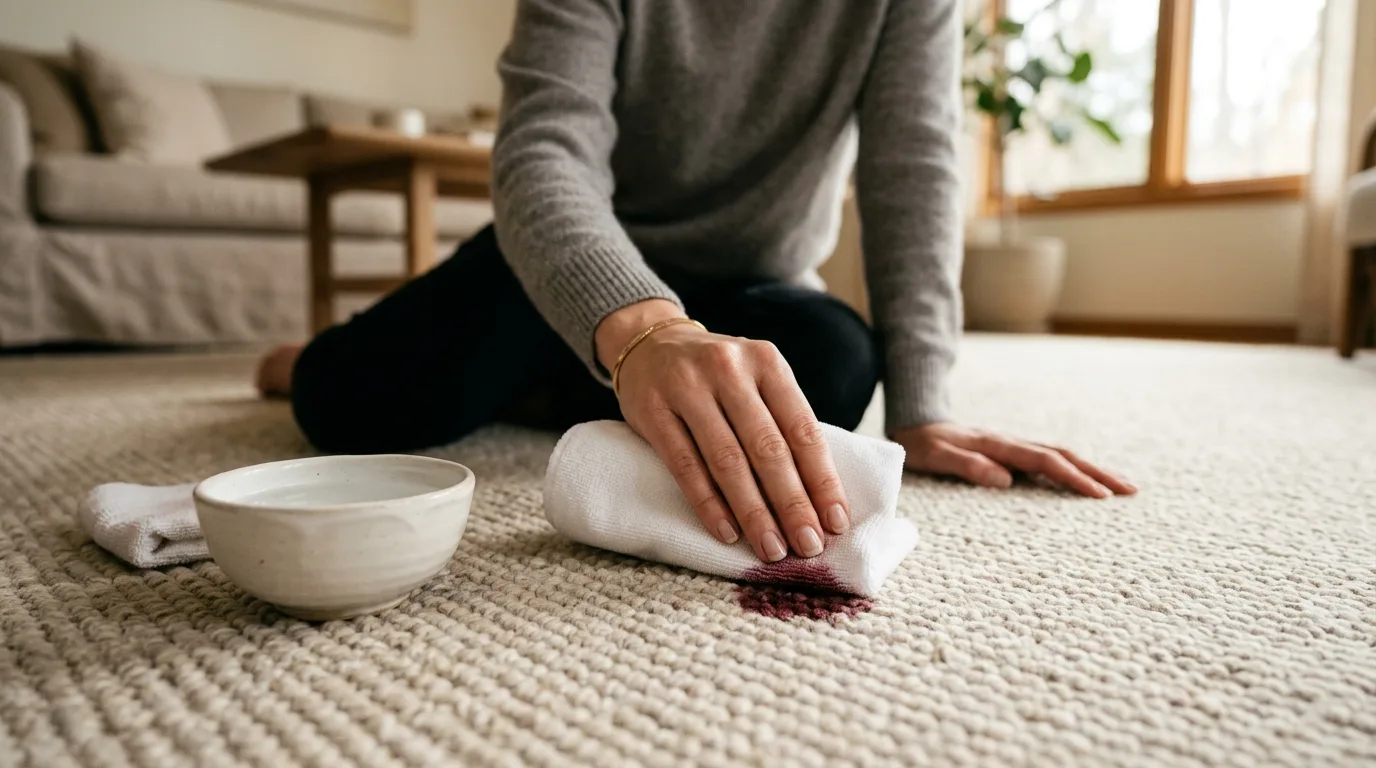
Blot fresh blood with cold water and a clean white cloth. Never use hot water, since heat cooks the protein into the fiber and sets the stain for good. If you remember only one thing from this post, that’s the one.
Blood is a protein stain. Cold water keeps the proteins loose so you can pull them out of the carpet. Hot water does the opposite, it bonds them to the fiber, often permanently. The faster you move and the colder the water, the better your odds of a full removal.
Here’s exactly what to do, whether the blood is still wet or has been sitting for a while.
The cold-water rule and why it matters
Blood contains hemoglobin, a protein that denatures, changes structure, when it gets warm. Once that happens, the protein essentially glues itself to carpet fibers at a molecular level. A stain that would’ve come out in five minutes with cold water can become a permanent fixture after one round with hot water or a steam cleaner.
This is why the standard advice to “treat stains with warm water” does not apply here. The chemistry is different with protein stains, and blood is one of the most protein-dense liquids you’ll spill on a carpet.
The same rule applies to the dryer, if you treat a blood-stained fabric item and toss it in the dryer before the stain is fully gone, heat will lock in whatever’s left. With carpet, the analogy is using hot water or steam too early in the process.
San Diego’s dry climate (and especially the low humidity during Santa Ana wind events) means blood stains can start drying within minutes, even in a cooled room. Move quickly.
Fresh blood: step-by-step removal
You have the best chance of full removal when the blood is still wet. Here’s the process.
-
Blot immediately. Grab a clean white cloth or paper towels. Press down firmly and lift straight up. Don’t rub, don’t scrub. Rubbing spreads the stain and pushes it deeper into the pile. Work from the outside edge of the stain toward the center to keep it from spreading.
-
Apply cold water. Pour a small amount of cold water directly onto the stain or use a spray bottle. Blot again. Repeat this two or three times to dilute as much of the blood as possible before bringing in any cleaning product.
-
Add a small amount of dish soap. A drop or two of plain dish soap (clear or white, not the gel kind with dyes or moisturizers) mixed into a cup of cold water works well on fresh blood. Apply the solution, let it sit for about a minute, then blot. Rinse with plain cold water and blot dry.
-
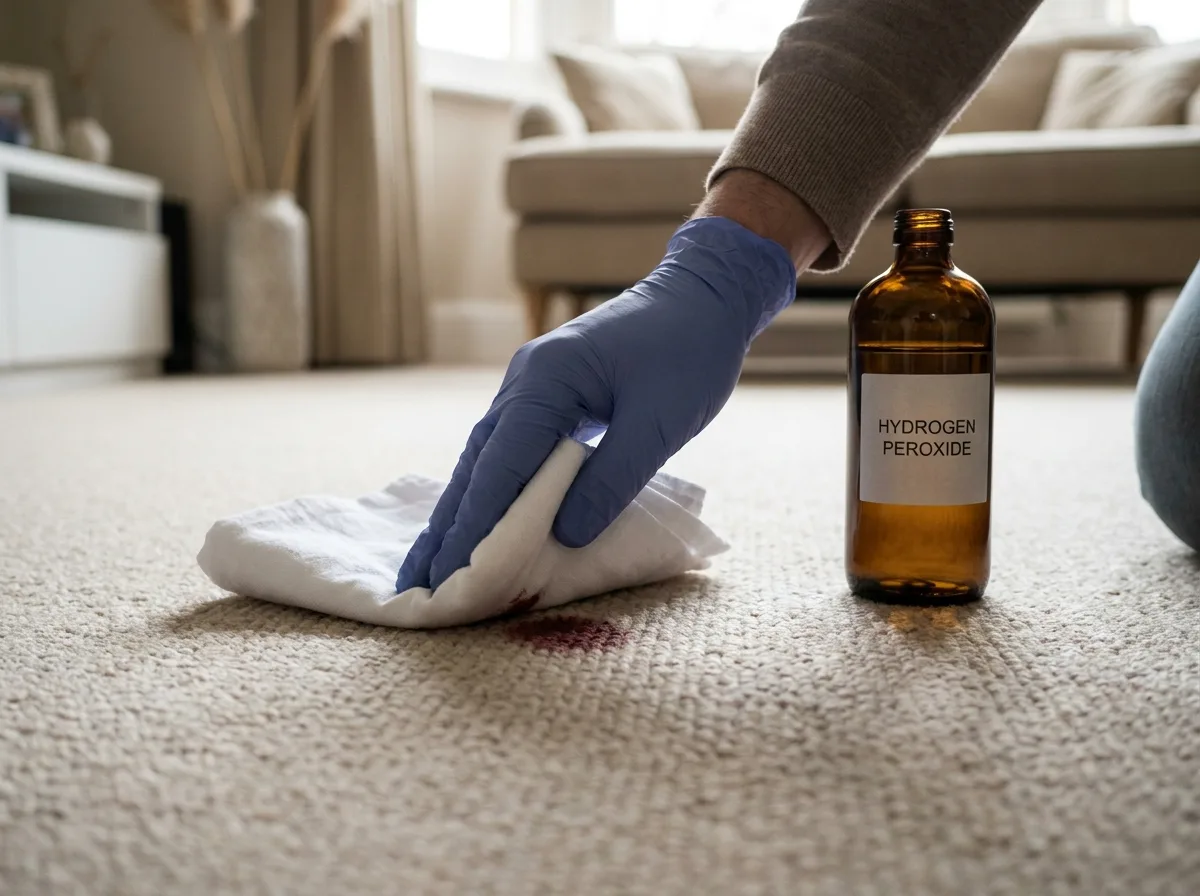
Try hydrogen peroxide if needed. If the stain is still visible after dish soap, plain 3% hydrogen peroxide (the kind from the drugstore, not salon-strength) can lift the remaining color. Test it in a hidden spot first, hydrogen peroxide can lighten some carpets, particularly wool or certain dyed nylons. Apply a small amount, let it bubble for a few minutes, then blot and rinse with cold water.
-
Finish with an enzyme cleaner. Enzyme cleaners break down protein molecules, which makes them particularly effective on blood. Apply according to the product label, let it dwell, then blot and rinse. This step helps prevent any remaining odor as well.
Dried blood: how to loosen and remove it
Dried blood is harder, but it’s not hopeless. The goal is to rehydrate the stain before treating it.
-
Scrape off any dried residue first. Use a dull knife or a spoon to gently lift and remove any dried flakes sitting on top of the carpet fibers. Don’t press them in, just remove what’s loose.
-
Soak with cold water. Apply cold water generously to the dried stain and let it sit for 5 to 10 minutes. This softens the proteins enough to start working on them. You may need to repeat this a couple of times.
-
Apply an enzyme cleaner. This is where enzyme cleaners earn their keep on dried blood. Apply a generous amount, cover with a damp cloth to keep it from drying out, and let it dwell for 15 to 30 minutes. The enzymes need time to work through the dried protein.
-
Blot and repeat. Blot with a clean cloth, apply more cold water, and blot again. For old or heavy stains, you may need to do this two or three times.
-
Use hydrogen peroxide as a follow-up. If color remains, follow the same hydrogen peroxide process described above, test first, apply carefully, blot, and rinse with cold water.
Old blood stains that have been sitting for days or weeks may need professional extraction to fully remove, especially on wool, wool blends, or lighter-colored carpets.
What not to do
A few things that seem logical but will make the problem worse.
Hot water. Already covered, but worth repeating, never. If you’re using a home carpet cleaner or spot cleaner, make sure you’re not using a heated setting.
Scrubbing. Scrubbing creates friction and drives the stain deeper into the pile. It also distorts the carpet fibers, which can leave a fuzzy or matted patch even after the stain is gone.
Bleach on colored carpet. Bleach will remove the stain and the color around it. On white or very light carpet, a carefully diluted bleach solution can work, but it’s a high-risk move that can damage fibers. Enzyme cleaners are a safer alternative.
Club soda or vinegar as a first step. Club soda is mostly just carbonated water, and vinegar is an acid that can affect some carpet dyes. Neither addresses the protein chemistry of blood. Save them for other stains.
Dish soap with dyes or moisturizers. Some dish soaps leave a residue that attracts dirt over time. Use plain, clear dish soap in small amounts.
Products: what works and what to skip
| Product | Verdict |
|---|---|
| Cold water | First step, always |
| Plain dish soap (clear) | Good for fresh blood |
| 3% hydrogen peroxide | Effective, test first on dark or wool carpet |
| Enzyme cleaner | Best all-around for blood, fresh or dried |
| Hot water | Never on blood |
| Bleach | Avoid on colored carpet |
| Vinegar | Not the right tool for blood |
| Club soda | Not effective on protein stains |
A note on fiber type
San Diego homes have a range of carpet types. Wool carpet is common in older Craftsman homes and higher-end neighborhoods. Wool is more sensitive to hydrogen peroxide and enzyme cleaners, always test in a hidden spot and check the product label for wool compatibility.
Nylon is more forgiving and the most common fiber in newer construction. Polyester and olefin are usually the most stain-resistant but can be harder to clean once a stain sets.
If you don’t know your fiber type, check the care label under a corner of the carpet or ask when you have it professionally cleaned.
Frequently asked questions
Does hydrogen peroxide remove blood from carpet?
Yes, 3% hydrogen peroxide can remove blood stains, particularly on lighter carpets. It works by oxidizing the hemoglobin in the blood, which breaks down the pigment. Always test in an inconspicuous area first, since it can lighten some carpet dyes, especially on wool or dark-colored carpet.
Will hot water set a blood stain?
Yes. Hot water causes the proteins in blood to denature and bond to carpet fibers, which makes the stain much harder or impossible to remove. Always use cold water when treating blood stains. This applies to all protein-based stains, including egg and dairy.
How do you get dried blood out of carpet?
Start by scraping off any dried residue, then soak the area with cold water for 5 to 10 minutes to rehydrate the stain. Apply an enzyme cleaner and let it dwell for 15 to 30 minutes before blotting. Repeat as needed. Follow up with hydrogen peroxide if color remains. Old or heavy dried blood stains may need professional hot-water extraction.
Does vinegar get blood out of carpet?
Not effectively. Vinegar is a mild acid that works on some stains (like mineral deposits), but it doesn’t address the protein structure of blood. It can also affect some carpet dyes. For blood stains, cold water, dish soap, hydrogen peroxide, and enzyme cleaners are more reliable options.
Can I use a steam cleaner on a blood stain?
No, not while the stain is active. Steam uses heat, which sets protein stains. Remove the blood first using cold water and the steps above, then, once the stain is fully gone, a steam cleaning or professional hot-water extraction is fine as part of routine maintenance.
When should I call a professional carpet cleaner?
Call a pro when the stain is large, has been sitting for more than a day or two, or when repeated DIY attempts haven’t made a meaningful difference. Professionals have truck-mounted extraction equipment that gets deeper into the pile and can flush out stains that surface-level treatments can’t reach. Wool carpet with blood stains is also a good candidate for professional care, since the fiber is sensitive and the stakes are higher.
When DIY isn’t enough
Most fresh blood stains on synthetic carpet respond well to the steps above. But a large stain, a stain on wool, or one that’s been sitting for days often needs more than a spray bottle and paper towels.
Carpet Pros SD handles same-week stain treatment across San Diego County. Whether it’s a nosebleed on a white berber or a pet injury on a wool area rug, we can tell you honestly whether the stain can be removed and what to expect before we start.
Call us at (858) 925-5546 or book online to schedule. Most stain jobs can be fit in within a few days.
Related posts you might find useful:
- How to remove red wine stains from carpet
- The complete carpet stain removal guide for San Diego homes
- Pet urine odor removal: what actually works
Our services: