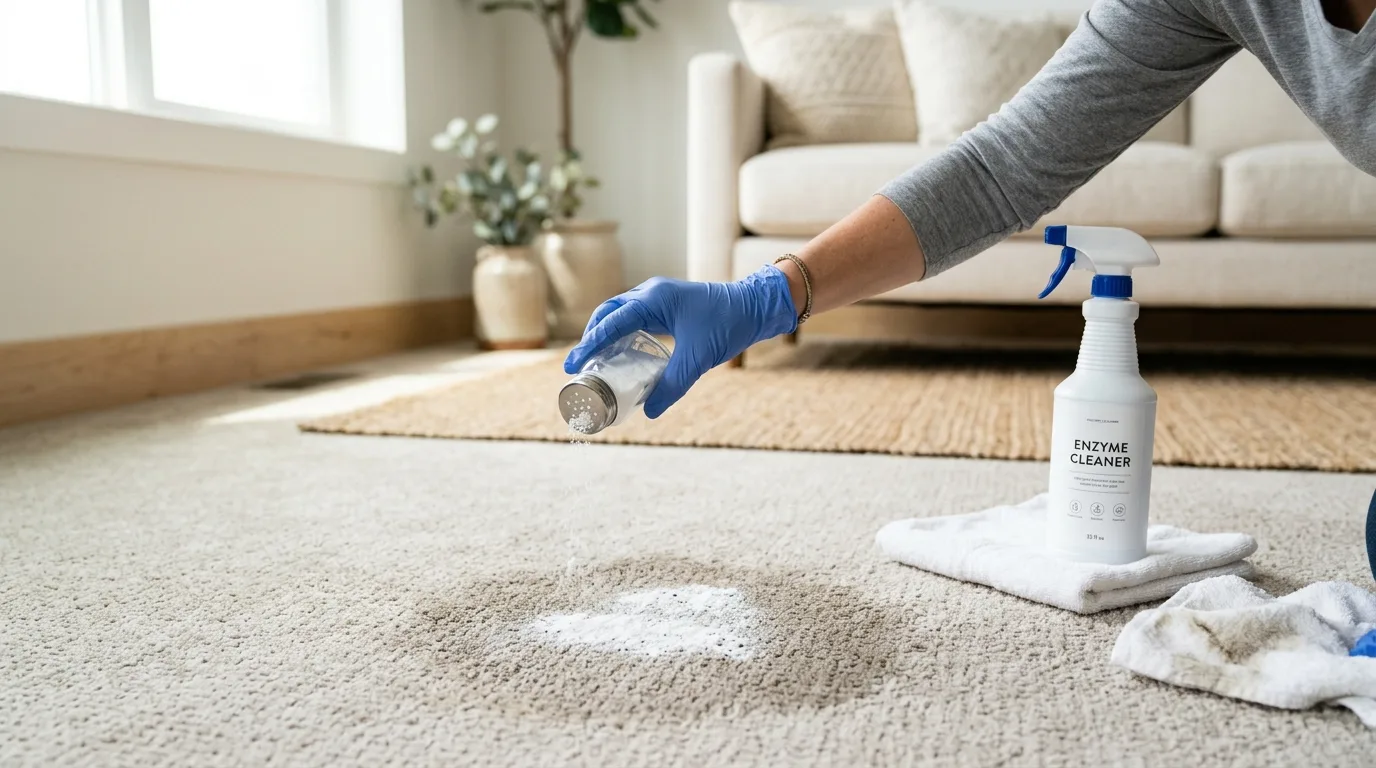
Remove the solids first, cover the spot with baking soda to absorb moisture and stomach acid, then clean with an enzyme cleaner to break down the proteins and kill the smell. That sequence matters. Skip any step and you either set the stain or leave behind the odor compounds that no amount of air freshener will touch.
Here’s exactly how to do it, why the order counts, and what to avoid.
Act fast, stomach acid starts working immediately
Vomit is acidic. The moment it hits carpet fibers, stomach acid begins breaking down the dye and weakening the fiber structure. The longer it sits, the more likely you end up with a permanent color change or a stain that no surface cleaning can lift.
Heat makes it worse. If you try to clean with warm or hot water before removing the solids, you cook the proteins into the fibers, the same way egg whites set when they hit a hot pan. Cold water only at this stage.
In San Diego, this comes up constantly. Families with kids, multiple pets, or anyone who’s driven back from a coast trip with a carsick passenger knows the drill. The good news is that vomit responds well to the right approach, even on carpet that’s been sitting for a few hours.
Step-by-step: how to clean vomit from carpet
Work through these steps in order. Do not skip ahead.
-
Remove the solids. Use a spoon, dull knife, or folded cardboard to scoop up as much solid material as possible. Work from the outside edge of the stain inward so you don’t spread it. Blot any liquid with a clean white cloth, no rubbing.
-
Cover with baking soda. Pour a generous layer of baking soda over the entire affected area. It absorbs residual moisture and neutralizes some of the acid. Leave it for at least 15 minutes. For wet spots, 30 minutes is better.
-
Vacuum thoroughly. Once the baking soda has absorbed what it can, vacuum it up completely. Use a brush attachment if you have one to lift the powder out of the pile.
-
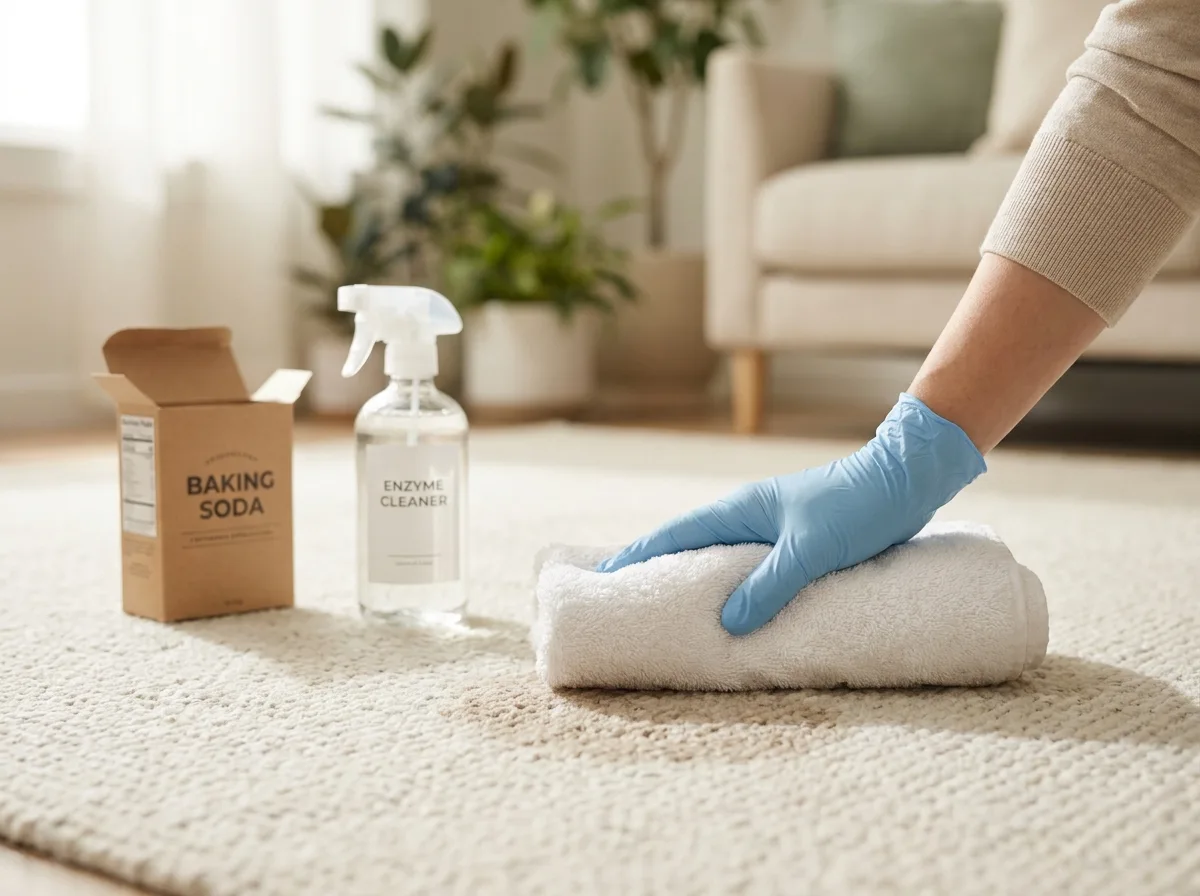
Apply an enzyme cleaner. Spray or pour an enzyme-based cleaner over the stain, following the product’s directions for dwell time (usually 5 to 10 minutes). This is the critical step. Enzyme cleaners contain biological compounds that break down the proteins, fats, and acids in vomit at a molecular level.
-
Blot, don’t scrub. Press a clean white cloth firmly onto the area and lift. Repeat with a fresh section of cloth each time. Scrubbing spreads the stain and can push it deeper into the padding.
-
Rinse with cold water. Apply a small amount of cold water, then blot again to pull out the cleaning solution and any remaining residue.
-
Dry the area completely. Point a fan at the spot or open a window. Wet carpet padding is a mold risk, especially in San Diego’s coastal humidity. If the stain was large or the carpet is thick, consider placing dry towels under a heavy object over the spot to wick moisture out of the padding.
If vomit has soaked through the carpet into the padding, surface cleaning alone won’t remove the smell. The padding holds odor compounds that keep releasing even after the carpet looks clean. This is when professional extraction makes a real difference.
Why the smell keeps coming back, and how enzyme cleaners fix it
The lingering smell after a vomit cleanup isn’t just unpleasant. It’s biological. Vomit contains proteins, bile salts, and bacteria that continue to break down over time, releasing volatile compounds that your nose picks up even when the stain is visually gone.
Masking sprays, Febreze, air fresheners, even vinegar mists, don’t address this. They cover the smell temporarily or alter its character, but the source compounds are still there.
Enzyme cleaners work differently. The enzymes in these products specifically target organic compounds: proteins, fats, uric acid. They break them down into smaller molecules that evaporate or get absorbed rather than continue to decompose. This is the same chemistry used for pet urine treatment. If you’ve had good results with an enzyme cleaner on pet accidents, it will work the same way on vomit.
Pet vomit vs. human vomit: what’s different
Dog and cat vomit often contains bile, which gives it a yellow-green color that can stain faster than human vomit. Bile is particularly aggressive on light-colored carpet. The same step-by-step process applies, but if your pet vomited hairball material, remove every strand of hair before applying baking soda, wet hair in carpet is difficult to vacuum and can hold odor.
Cats tend to vomit on soft surfaces by instinct, which means carpet is a frequent target. If your household has multiple cats or a dog with a sensitive stomach, keeping an enzyme cleaner stocked is worth it. The same product you use for pet urine works here. For ongoing pet-related odor issues, our pet odor removal service uses professional-grade enzyme treatment with hot water extraction to reach the padding.
What not to do
A few common mistakes make the problem worse:
- Don’t use hot water. Hot water sets protein stains. Always cold water until the stain is fully treated.
- Don’t scrub. Scrubbing pushes the stain deeper into the fiber and spreads it outward.
- Don’t use vinegar as your only treatment. Vinegar neutralizes some odors and works fine as a surface deodorizer, but it doesn’t break down proteins. On deep odor issues, vinegar alone will not get the job done.
- Don’t skip the drying step. Damp carpet and padding grow mold. In San Diego’s coastal zip codes, this can happen faster than you’d expect.
- Don’t use carpet powders that just mask smell. Commercial deodorizing powders are fine for light freshening but won’t address biological odor compounds.
What works vs. what to skip
| Approach | Result |
|---|---|
| Solids removed immediately | Prevents stain from spreading and setting |
| Baking soda treatment | Absorbs moisture and neutralizes surface acid |
| Enzyme cleaner with full dwell time | Breaks down odor compounds at the source |
| Vinegar mist only | Temporary odor masking, doesn’t remove proteins |
| Hot water cleaning | Sets protein stains permanently |
| Scrubbing | Spreads stain, damages fiber |
| Air freshener spray | Covers smell, source remains |
For stubborn stains or cases where the padding has absorbed the liquid, professional hot water extraction is the most reliable option. We also use this same enzyme-based approach in our stain removal service for situations where DIY treatment didn’t fully resolve the issue.
Frequently asked questions
Does baking soda remove vomit smell from carpet?
Baking soda helps, but it doesn’t fully remove the smell on its own. It absorbs moisture and neutralizes surface acid, which reduces the initial odor. For the underlying smell, caused by proteins and bile breaking down in the fiber, you need an enzyme cleaner. Use baking soda as step two in the process, not as the final solution.
How do you get dried vomit out of carpet?
Rehydrate it first. Dampen the dried area with cold water and let it sit for a few minutes to soften the material. Then scrape gently with a dull edge and proceed with the baking soda and enzyme cleaner steps. Dried vomit is harder to remove than fresh, so you may need to repeat the enzyme treatment and let it dwell longer, up to 15 minutes.
What kills the smell of vomit in carpet?
Enzyme cleaners are the most effective solution. They break down the organic compounds that cause the smell rather than masking them. Look for products specifically labeled as enzyme-based or biological cleaners, these are the same products used for pet urine odor. If the smell persists after treatment, the padding likely absorbed the liquid and needs professional extraction.
Is vomit on carpet a health hazard?
Untreated vomit can be a health concern, particularly if it contains pathogens from illness. Stomach acid can also harbor bacteria as it breaks down. The bigger long-term risk is mold if the carpet and padding stay damp. Clean it promptly, dry the area thoroughly, and if there’s any question about whether the padding is saturated, professional extraction removes the liquid that DIY blotting can’t reach.
Can I use a steam cleaner on a vomit stain?
Not right away. Steam is hot, and heat sets protein stains. Clean the stain first using the cold-water and enzyme method, make sure it’s fully treated, and then use steam if needed for sanitizing. If you steam before removing the proteins, you’ll likely make the stain permanent.
When should I call a professional carpet cleaner?
If the vomit soaked through to the padding, if the stain has dried and enzyme treatment isn’t fully lifting it, or if the smell returns after cleaning, professional extraction is the right call. Hot water extraction reaches the padding, where odor compounds live long after the surface looks clean. We serve all of San Diego County and can usually schedule same-week or next-day for situations like this.
For more on related cleaning challenges, see our guides on pet urine odor removal, carpet stain removal in San Diego, and how often you should clean your carpet.
If you’ve done everything here and the smell or stain isn’t fully gone, give Carpet Pros SD a call at (858) 925-5546. We cover all of San Diego County and can get you on the schedule quickly.